

Set White Wolf 2025
A hard-hitting diamond with easy ball exit and a softer touch, asking the player to manage its head-heavy swing.
Our Take
Shape
Diamond
Core
EVA Soft Performance
Faces
3K Carbon
Frame
Carbon
What we like
- Easy smash acceleration
- Lively volleys with strong exit
- Broad sweet spot for diamond
What we don't
- Demanding defensive timing
- Slow in close net exchanges
- Delicate touch shots need soft hands
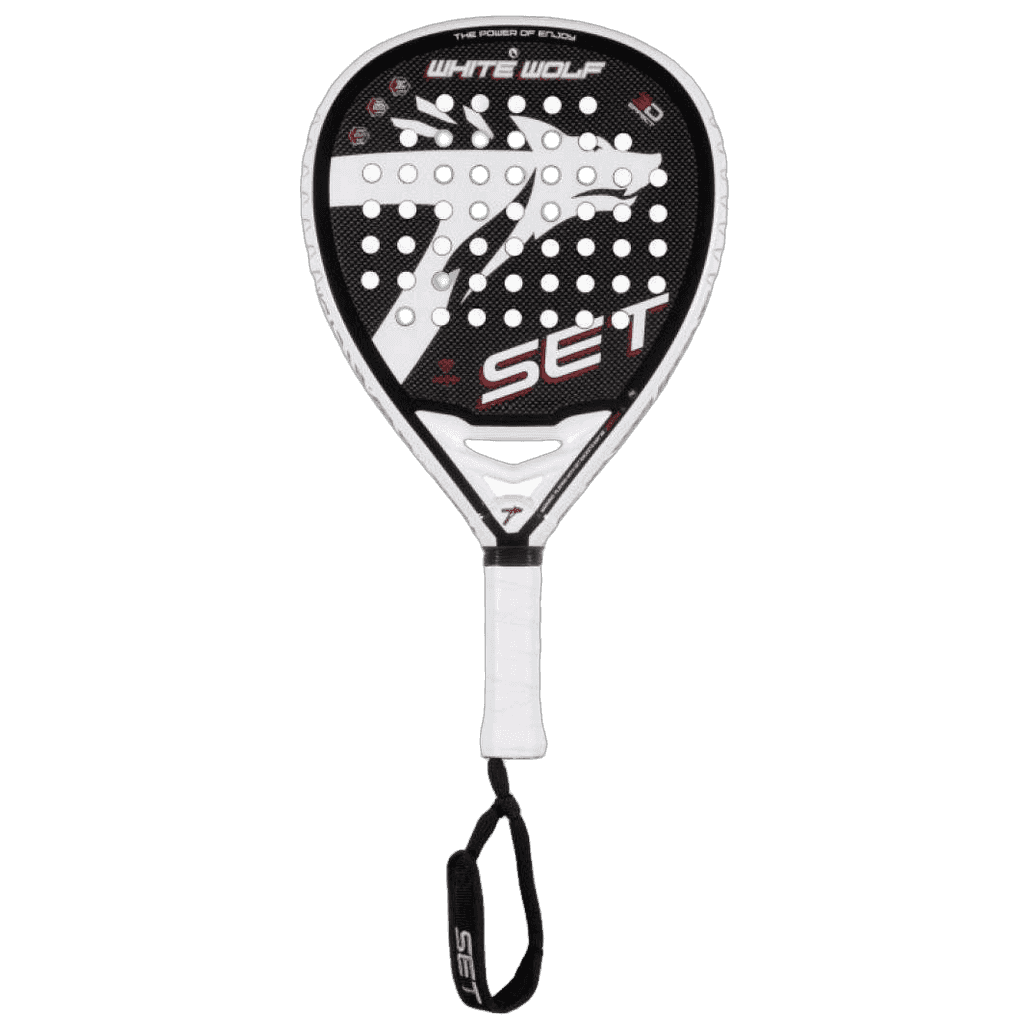
Set White Wolf 2025 is an unapologetically attacking racket. Its diamond shape, lively response, and power-focused layout make it want to finish points rather than simply keep them neutral.
I see it as a racket for players who already generate a clean, fast swing and want more damage on overheads and aggressive volleys. It is not a relaxed, easy-handling option for long defensive exchanges.
The big appeal is the combination of high ball exit and a reasonably broad sweet spot for this shape. The trade-off is clear: it asks more from your timing than a round or lower-balance racket.
Technical analysis
Shape & balance
The diamond mold places the hitting area higher and gives the White Wolf an offensively biased balance. In my hand, that kind of setup naturally favors acceleration through the ball on volleys, bandejas, and especially the smash.
That higher balance also explains its moderate maneuverability. Quick changes at the net, late blocks, and fast exchanges close to the body will demand active wrist work. It is not clumsy, but it will not disappear in the hand either. Players used to head-light rackets may initially send a few defensive balls too high or arrive late on backhand volleys.
The quoted sweet-spot rating makes sense for an attacking diamond racket: there should be enough usable face area to avoid punishing every slightly off-center contact. Still, the cleanest response will be high on the face, where this racket is designed to work.
Materials & construction
Set uses a Carbon frame, 3K Carbon faces, and an EVA Soft Performance core. That construction points toward a response that is elastic rather than dry: the ball should leave the face quickly without requiring the player to overhit.
The soft-performance EVA is an important part of the character. It should help on medium-paced balls and give depth to defensive lobs, but it will not deliver the ultra-crisp, compact feedback that some advanced players prefer for touch shots. The carbon faces bring needed stability, though I would not expect the stiff, punishing feel associated with harder 12K or 18K constructions.
On-court feel
Baseline play
From the baseline, the White Wolf’s ball exit is useful when you are under pressure. A compact block or a controlled off-the-wall return should travel with less effort than it would from a firmer, lower-rebound racket.
That same rebound can work against you. On slow defensive balls, I would keep the face stable and shorten the stroke; otherwise, the racket may add more depth than intended. It is better for sending a low-driven lob or a deep counter than for feathering short, dead balls.
At the net
This is where I would expect it to earn its place. The high balance helps the racket carry through aggressive volleys, and the soft core should give the ball a fast exit even when the contact is not fully loaded.
Touch is less convincing. A delicate drop shot or chiquita requires soft hands because the face is built to return energy. It rewards decisive net play, not passive placement.
Smash
The smash is the White Wolf’s natural shot. The diamond profile, power rating, and high rebound suggest easy acceleration and strong transfer when you catch the ball above the sweet spot.
It does not replace technique. Players without a reliable overhead may find the head-heavy feel tiring and inconsistent, particularly late in a match.
Conclusion
I would put the White Wolf in the hands of intermediate-to-advanced attacking players who want help creating pace from the net and on overheads. It has the ingredients for a very lively offensive racket without an extremely small sweet spot.
The compromise is maneuverability and touch. Defensive players who prioritize fast reactions, soft blocks, and precise short-ball control will probably be more comfortable with a lower-balance, less reactive racket.
Switch Intelligence
Be the first to share where you switched from.
Community reviews
Real feedback from players who used this racket.
Add your review
To submit your review, log in first. You can still read all approved community reviews below.
Add review


