

Softee Freezer Carbon 3K Verde 2026
A composed tear shape with a medium, measured touch, built to defend cleanly and stay quick when the point speeds up at the net.
Our Take
Shape
Tear
Weight
355 - 370 gr
Touch
Medium
Core
Professional Black EVA
Faces
3K carbon
Frame
100% carbon
What we like
- Predictable defensive lob depth
- Quick reaction volleys and blocks
- Stable, controlled *bandejas*
What we don't
- Off-center contact feels harsh
- Smooth face limits slice bite
- Requires acceleration for finishing power
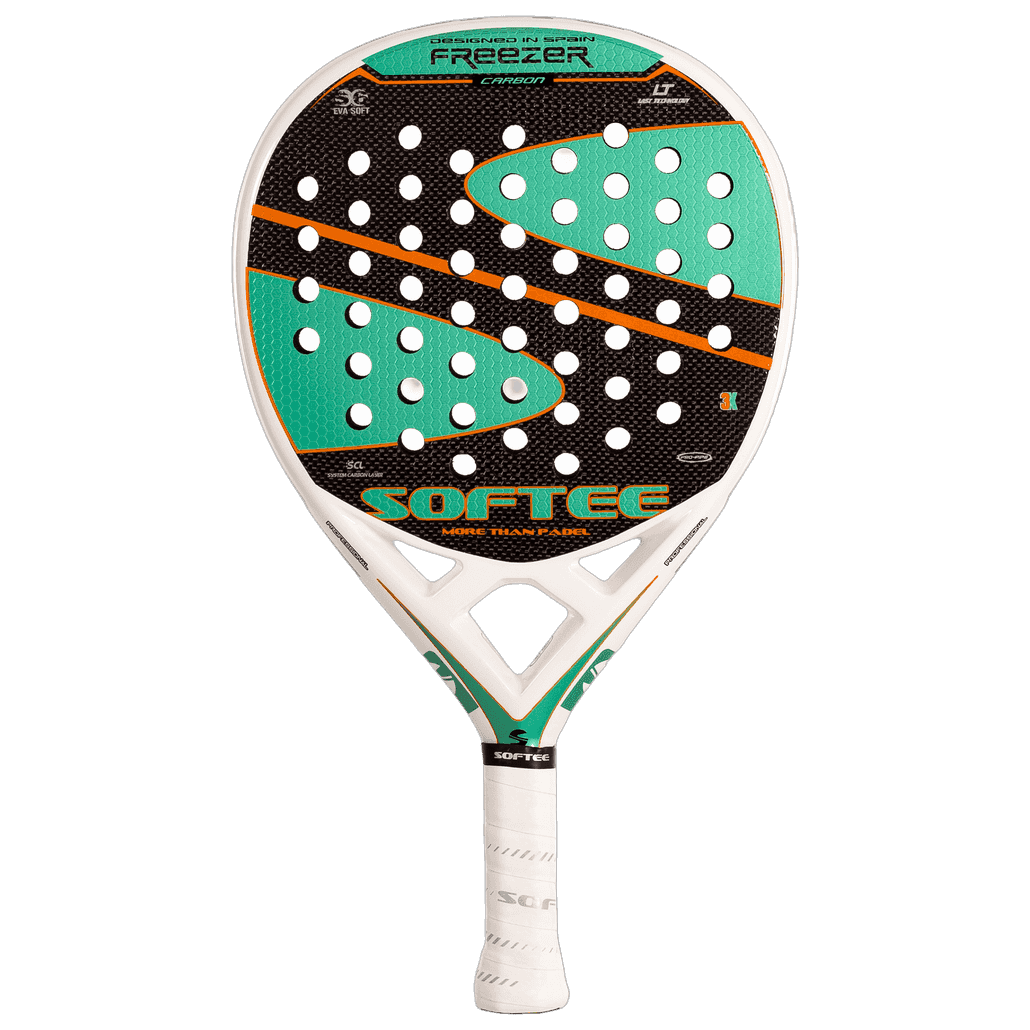
Softee Freezer Carbon 3K Verde 2026 is a controlled, medium-firm racket that asks me to build the pace rather than handing it over for free. It feels most at home in organized points: defending with depth, taking the net early, and keeping overheads measured.
I see it fitting intermediate players who value predictable contact more than a dramatic, head-heavy attacking response. It moves quickly enough for fast exchanges, but it is not a racket that flatters loose timing.
Technical analysis
Shape & balance
The tear shape gives this racket a fairly even attacking-defensive profile. I do not feel it dragging through the air in quick volley exchanges, and that matches its strong handling on blocks, transition balls, and defensive lobs.
Its balance does not make the head feel cumbersome, which helps when I need to react late at the net or adjust the racket face against a hard body shot. The trade-off is clear: it does not generate the same free leverage on a smash that a more head-heavy diamond racket can provide. I need a committed swing and clean contact to get the ball moving with authority.
Materials & construction
Softee uses a 100% carbon frame, 3K carbon faces, and a Black EVA Profesional core. Together, they produce a medium feel that leans firm without becoming excessively dry. The contact is direct and easy to read, especially on controlled shots where I want to judge depth rather than simply absorb the ball.
The smooth face is less convincing for players who rely heavily on slice. I can still shape a víbora or cut a volley, but the racket does not provide much extra bite. Centering also matters. Outside the sweet spot, the response becomes noticeably harsher and loses some of its otherwise reliable direction.
On-court feel
Baseline play
From the baseline, I like how easy this racket is to meter. Blocks stay controlled, and I can send a defensive lob without the ball jumping unpredictably off the face. Off-the-wall play feels dependable too, provided I prepare the racket early and do not expect the core to rescue a passive swing.
Ball exit is moderate rather than lively. That is useful when I want to keep the ball low or play a low-driven lob, but it means I have to accelerate through deeper defensive shots. Players looking for effortless length from compact strokes may find it a little underpowered.
At the net
At the net, the Freezer Carbon 3K feels quicker than its power rating might suggest. I can get the racket into position for reaction volleys and blocks without fighting the head, and its firm response helps me direct the ball rather than just cushion it back.
It works particularly well for controlled volleys and chiquitas played with a short, deliberate motion. What it does not do is turn an average contact into a heavy winner. To put real weight through the volley, I still need to step in and accelerate.
Bandeja and víbora
This is one of its better areas. The racket stays stable through a bandeja, and I find it easy to vary height and depth without overhitting. The predictable response makes transition overheads less stressful, especially when I am trying to keep opponents pinned rather than force an outright finish.
A more aggressive víbora is possible, though the smooth face limits the amount of cut I can produce. It rewards clean technique, not exaggerated wrist action.
Conclusion
I would choose this racket for an intermediate player who wants a clear, controlled response in defense and quick handling at the net. It has enough power for a well-struck smash, but that power comes from my acceleration, not from a trampoline-like core.
The trade-off is a smaller margin on off-center contact and limited help with spin. Pure attackers and advanced players chasing a more radical, explosive response will probably want more head weight, more bite, and easier finishing power.
What other reviewers say
- PadelTestLabes
The review finds it firm and predictable, with easy handling for blocks, volleys, and controlled defensive lobs. It also notes that the smooth face limits slice bite, the racket needs player-generated acceleration, and off-center hits feel noticeably harsher.
- AvisPadelfr
AvisPadel positions it as a versatile intermediate racket, with measured control on bandejas and transition shots plus easy movement in fast net exchanges. It has enough output to finish high balls, but requires reasonably consistent centering and may feel insufficiently specialized for experienced competitors.
Switch Intelligence
Be the first to share where you switched from.
Community reviews
Real feedback from players who used this racket.
Add your review
To submit your review, log in first. You can still read all approved community reviews below.
Add review


