

Softee Trionic Light 2026
A featherweight, soft-feeling tear shape that makes defense and quick net exchanges easy, though the smash remains measured.
Our Take
Shape
Tear
Weight
320 - 340 gr
Touch
Soft
Core
EVA Extrasoft
Faces
Fiberglass
Frame
Mixed with carbon reinforcements
What we like
- Forgiving sweet spot on defense
- Easy ball exit from baseline
- Fast handling in net exchanges
What we don't
- Modest smash finishing power
- Springy response on hard volleys
- Limited bite on víboras
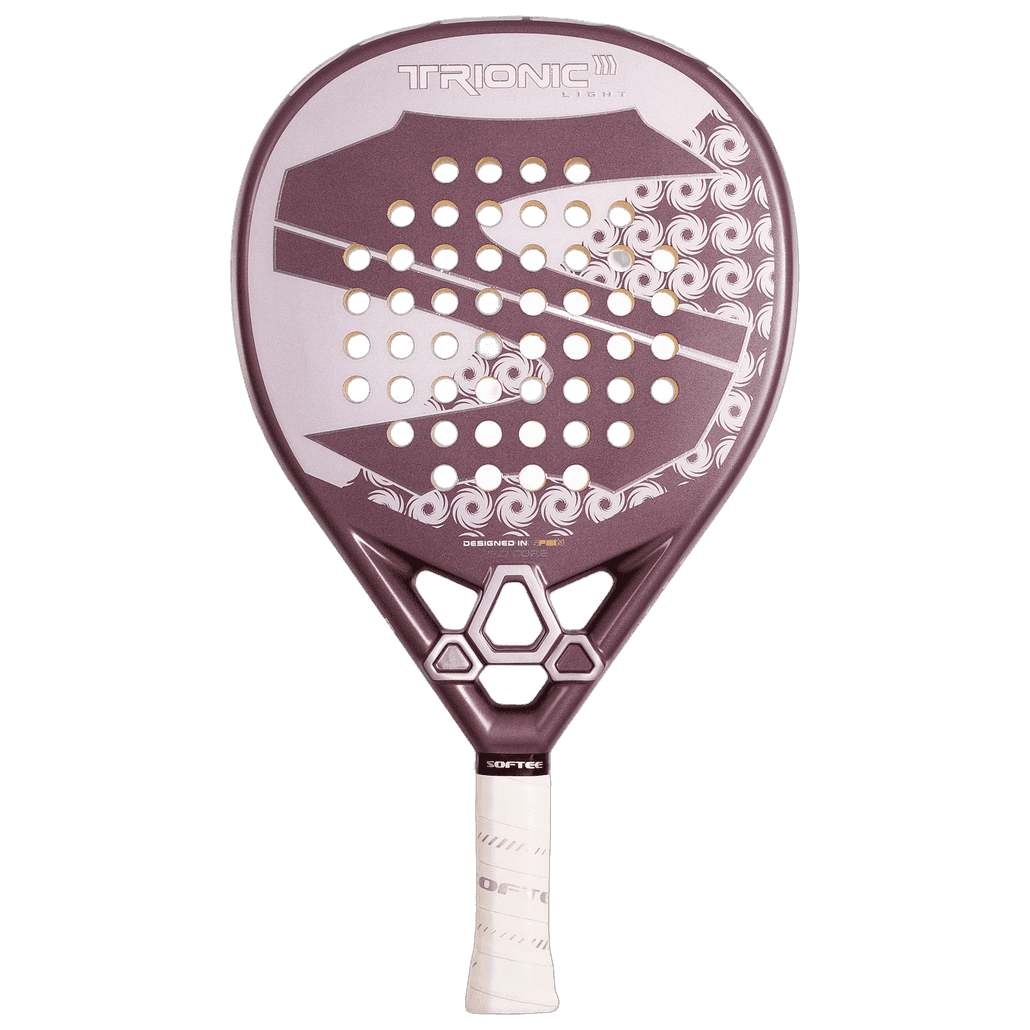
Softee Trionic Light 2026 is a comfort-first racket built around speed, forgiveness, and easy ball exit. Its tear shape gives it more all-court range than a round control racket, but the personality stays clearly soft and manageable.
I see it as a racket for players who want help from the baseline and quick hands at the net, not a tool for overpowering opponents.
The soft feel is central to the experience. It absorbs pace well, launches the ball with little effort, and makes off-center contact far less punishing than on a firmer carbon racket.
Technical analysis
Shape & balance
The tear format gives the Trionic Light a broad, accessible hitting area without pushing the balance too far toward the head. In hand, it feels quick through preparation and easy to reposition for blocks, volleys, and late defensive contacts.
That maneuverability is one of its strongest points. I would not expect it to offer the plow-through of a head-heavy attacking racket, though. When the point demands a heavy, accelerating swing, the frame does not carry much extra mass into the ball.
Materials & construction
Softee uses a mixed frame with carbon reinforcements, fiberglass faces, and an EVA Extrasoft core. That combination explains the racket’s forgiving response: the faces flex readily, while the soft core helps the ball leave the racket without needing a big swing.
The trade-off is precision at high speed. On slower defensive shots, the extra rebound is useful. When I really flatten out a volley or try to drive a hard víbora, the response can feel a little springy rather than sharply direct. Players who prefer a compact, firmer impact will likely find it too soft.
On-court feel
Baseline play
From the baseline, this racket is very friendly. The large sweet spot and lively ball exit make it easier to recover depth after a wall rebound, especially when I am stretched or arriving late. Defensive lobs come off the face with less effort than they would on a harder racket.
That same rebound means I need a soft hand on short balls. A passive block can travel deeper than intended, and touch shots require more restraint. It helps me defend, but it does not automatically give me pinpoint length control.
At the net
Quick exchanges are where the Trionic Light makes a strong case for itself. It gets into position fast, feels comfortable on reaction volleys, and does not punish me much when contact drifts away from the center. The feedback from independent testing also points to this quick, forgiving behavior around the net, and that fits the design.
I like it for directing blocks and keeping the ball low rather than trying to blast through opponents. It lacks the firm, heavy response that makes an aggressive volley feel oppressive.
Bandeja and víbora
The soft construction gives the bandeja a controlled, low-effort release. I can guide the ball toward the side wall without feeling that the racket is fighting my swing, and it is easy to keep the preparation compact.
A sliced víbora is workable, but I would not choose this racket for producing a particularly heavy, biting ball. It favors placement and consistency over a fast, penetrating overhead.
Smash
The smash is the clear limitation. There is enough output to finish a loose ball with good technique, but the racket does not generate the solid, high-impact finish of a stiffer, more head-heavy model. Flat power is modest, and it will not do much work for players who rely on the smash to end points.
Conclusion
I would point developing and intermediate players toward this racket, along with regular players who value comfort, a generous sweet spot, and easy defense. It makes difficult baseline contacts less stressful and stays fast in hand during quick net exchanges.
The trade-off is attack. You gain rebound and maneuverability, but give up punch on hard volleys, aggressive víboras, and especially the smash. Players who build points through placement, recovery, and steady pressure will get more from it than players looking to dominate with raw power.
What other reviewers say
- AvisPadelfr
The review rates it as highly maneuverable and comfortable in defense, with easy ball output and a forgiving sweet spot. It reacts quickly at net and offers controlled bandejas, but lacks the finishing power for dominant smashes or heavy attacking shots.
Switch Intelligence
Be the first to share where you switched from.
Community reviews
Real feedback from players who used this racket.
Add your review
To submit your review, log in first. You can still read all approved community reviews below.
Add review


