

Vibora Yarara Evo Pro 2027
A round control racket with a generous sweet spot, quick hands at the net, and enough punch to finish a shorter ball.
Our Take
Shape
Round
Weight
360 - 375 gr
Touch
Medium
Core
EVA Pro Balance
Faces
Jacquard Carbon
Frame
Carbon
What we like
- Large sweet spot on blocks
- Quick handling in net exchanges
- Predictable defensive lob depth
What we don't
- Limited smash finishing authority
- Needs acceleration on slow balls
- Heavy víbora demands clean technique
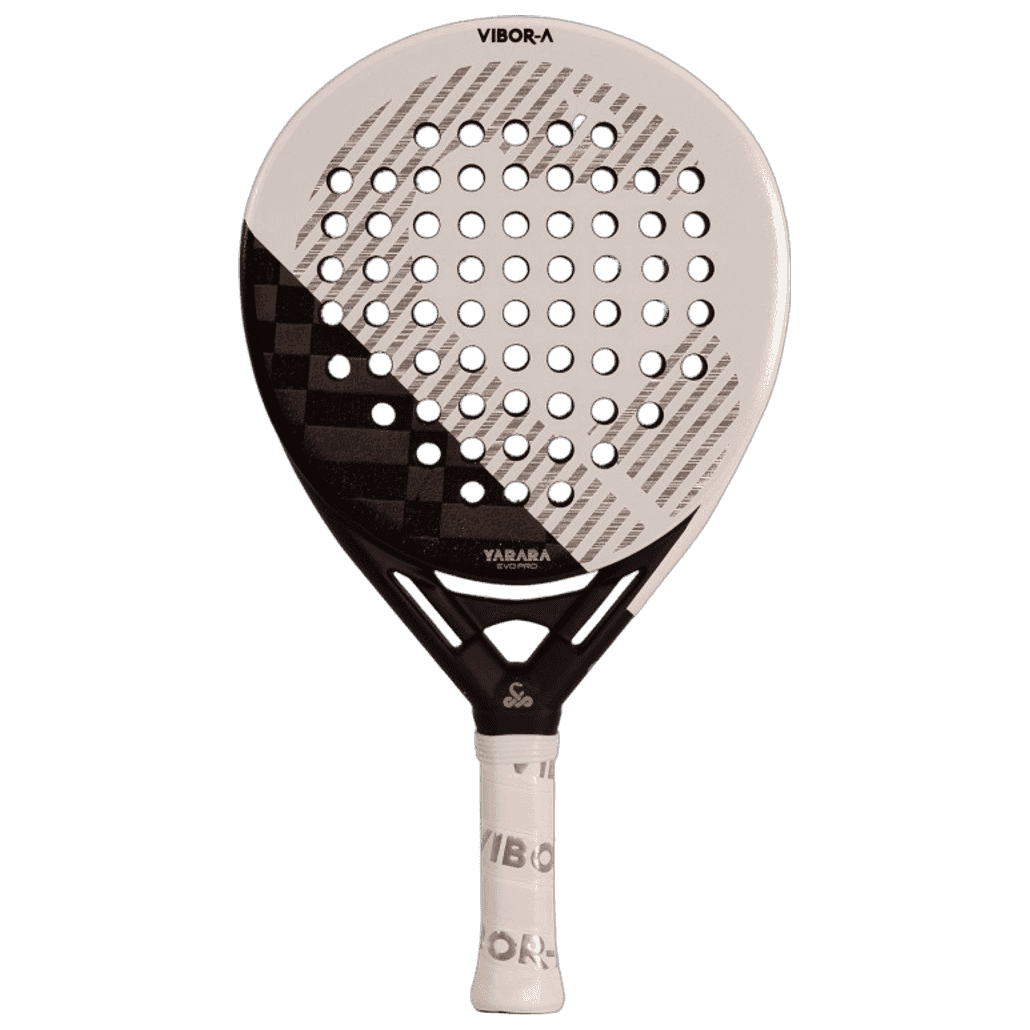
The Vibora Yarara Evo Pro 2027 is a control-first racket with enough response to keep the ball moving through the court. Its round shape and large sweet spot make it feel composed rather than demanding.
I see it fitting the player who builds points with placement, patient defense, and sharp work at the net. It is not a racket for forcing winners from awkward positions.
The character is clear: forgiving contact, quick handling, and a medium feel that sits between a soft rebound racket and a hard, dead-stiff control model.
Technical analysis
Shape & balance
The round mold puts the sweet spot high on the list of reasons to consider this racket. Contact feels more consistent across the central hitting area, which matters on rushed blocks, off-center volleys, and defensive balls played after the glass.
Its maneuverability should also appeal to players who dislike having to drag a head-heavy racket through every exchange. I found this type of setup more comfortable for fast preparation at the net and for changing the racket face late on a chiquita or block.
That said, the easy handling comes with a limit. It does not provide the same leverage through the ball as a diamond-shaped, head-heavy attacking racket. Players who rely on brute force in the smash will need to generate the speed themselves.
Materials & construction
The frame uses carbon, while the faces are made from Jacquard carbon. That combination points toward a stable, clean response rather than a loose, overly elastic one. On firm contact, I would expect the racket to hold its line well, especially when absorbing pace.
Inside, the EVA Pro Balance core helps explain the medium response. Ball exit should be available without feeling springy or vague. There is enough rebound for defensive lobs and controlled depth from the baseline, but the racket should reward a deliberate swing more than a passive touch.
I would not expect a particularly abrasive surface or extreme bite from this construction. It should let me shape spin on a víbora and sliced volley, but it is not built around exaggerated texture-driven effects.
On-court feel
Baseline play
From the baseline, the Yarara Evo Pro’s main strength is predictability. The broad sweet spot gives me confidence to block hard balls and send a defensive lob deep without needing pristine contact. It should also be forgiving on off-the-wall play, where timing is rarely as clean as I want it to be.
The medium core keeps the response controlled, but it will not rescue a ball with no acceleration behind it. On low, slow balls, I need to work a little more to produce depth. Players accustomed to a very soft racket may find the response less explosive.
At the net
This is where the quick handling makes the most sense. The racket should move easily through compact volleys, allowing me to keep the face stable and direct the ball rather than overhit it. Blocks against fast exchanges are a strong part of its profile.
I also like this kind of round, medium setup for controlled pressure: firm volleys to the feet, short angles, and a low-driven lob when opponents crowd the net. It is not the most punishing option for finishing a high volley, but it is easier to place repeatedly.
Bandeja and víbora
The response should suit players who prioritize direction and repeatability in overheads. A bandeja can be played with margin, while the manageable balance helps me keep the racket moving through a víbora without feeling late.
Power is available, just not handed over for free. If my technique is compact and I use the body properly, the ball should travel with enough weight. If I want an automatic, heavy overhead weapon, this is not that racket.
Conclusion
I would look at the Yarara Evo Pro 2027 if my game depends more on control, defense, net speed, and a reliable contact zone than on pure attacking output. Intermediate and advanced players with a structured game will get more from it than players still searching for easy power.
The trade-off is straightforward. It gives up some smash authority and finishing punch in exchange for a forgiving sweet spot, quick reactions, and a response that stays composed under pressure.
Switch Intelligence
Be the first to share where you switched from.
Community reviews
Real feedback from players who used this racket.
Add your review
To submit your review, log in first. You can still read all approved community reviews below.
Add review


