

Vibora Diva Evo Pro 2027
A round, composed racket with a generous sweet spot, giving confident hands at the net and enough punch to finish when the opening appears.
Our Take
Shape
Round
Weight
355 - 365 gr
Touch
Medium
Core
EVA Pro Balance
Faces
12K Carbon
Frame
Carbon
What we like
- Broad sweet spot on blocks
- Quick handling in net exchanges
- Controlled *bandeja* placement and depth
What we don't
- Limited flat-smash finishing weight
- Measured rebound on late defense
- Less effortless deep-court lifting
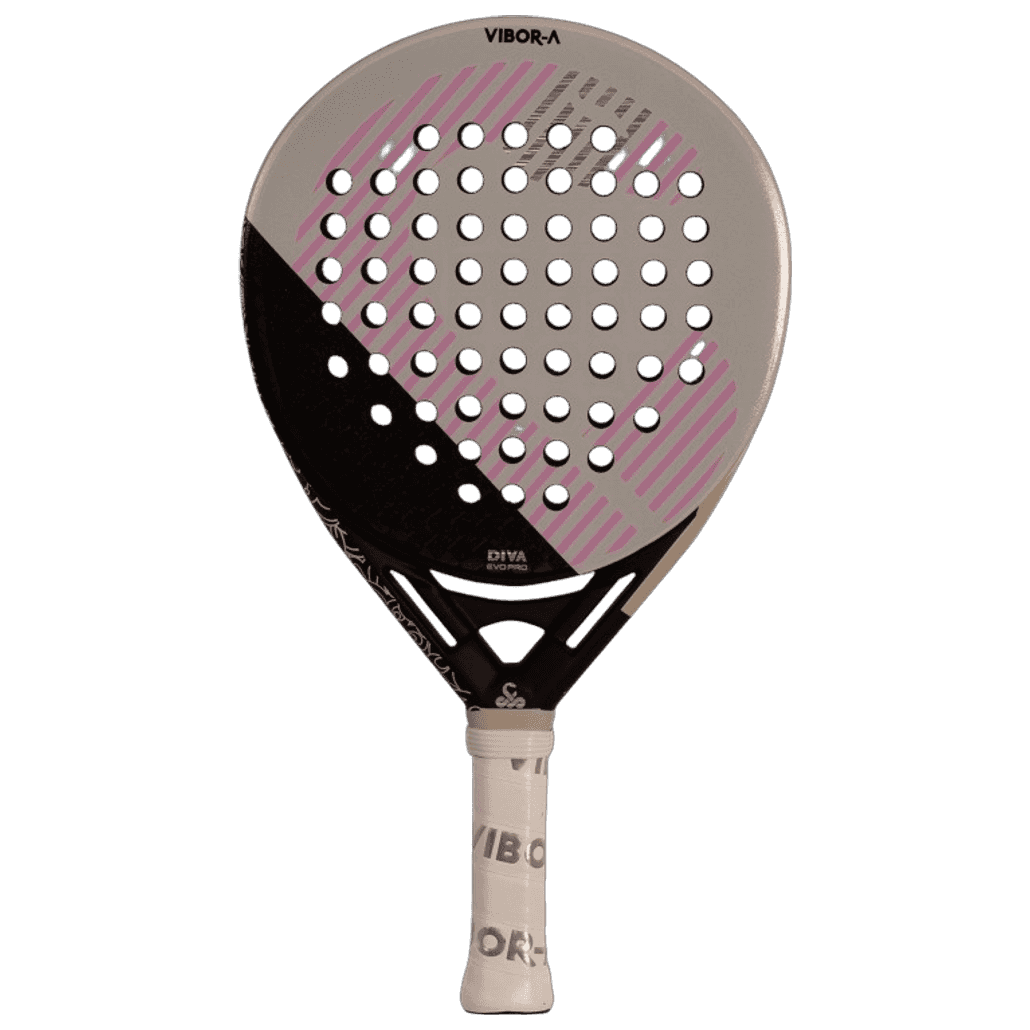
The Vibora Diva Evo Pro 2027 is a control-first racket with enough response to keep the ball moving through the court. Its round shape and medium feel point toward a player who builds points patiently, uses placement well, and wants a forgiving contact zone without a slow, overly soft response.
I see it fitting intermediate and advanced players who spend plenty of time defending from the baseline but still want to be active at the net. It is not a racket built around brute-force finishing.
The character is composed rather than explosive. You can accelerate it easily, find the ball cleanly under pressure, and work angles without feeling the head pull through the stroke.
Technical analysis
Shape & balance
The round mold gives this racket its main advantage: a broad, usable sweet spot that sits where most players naturally make contact. On blocks, defensive lobs, and compact volleys, that forgiveness matters. I would expect fewer dead contacts than with a more demanding diamond racket.
Its balance appears managed toward maneuverability rather than outright leverage. That makes it quick through preparation, especially in fast exchanges at the net and during off-the-wall play. The trade-off is clear: it will not provide the same automatic heaviness on a flat smash as a head-heavy attacking model. You need to create racket-head speed yourself.
Materials & construction
The carbon frame should keep the structure stable when receiving pace, while the 12K carbon faces add a firmer, more defined response than fiberglass. I expect a clean contact rather than a springy, vague one, particularly when guiding volleys or playing a controlled chiquita.
Inside, the EVA Pro Balance core supports that middle-ground response. Ball exit should be available without the racket firing the ball uncontrollably, which is useful when defending hard shots close to the body. Still, players who rely on a very soft core to lift the ball effortlessly from deep court may find it slightly less generous than a softer, more elastic option.
On-court feel
Baseline play
From the baseline, I would lean on this racket for direction and recovery rather than forcing winners. The large sweet spot should make defensive blocks and lobs feel dependable, while the medium response gives enough ball exit to send the ball deep without a huge swing.
It should also behave well on low-driven lobs and controlled returns after the glass. What it does not do especially well is rescue late, poor contact with pure rebound. If you arrive behind the ball and expect the racket to do all the lifting, the response may feel too measured.
At the net
This is where the quick handling makes sense. I can see it working well for short reaction volleys, blocks against fast drives, and changing direction late. The round format should help keep the racket face stable when the ball arrives awkwardly.
Aggressive players can still put weight into a volley, but the result will come more from timing and clean technique than from raw head-heavy momentum. For touch, it should be a useful racket: drop shots and short angled volleys ought to be easier to judge than with a harder, more explosive frame.
Bandeja and víbora
The maneuverable profile should make repeated overheads less tiring and easier to place. I would favor a controlled bandeja with depth and margin over trying to hit every ball through the court. A víbora should benefit from the 12K face’s directness, although it is unlikely to produce the vicious, heavy kick of a dedicated attacking racket.
Conclusion
I would choose the Diva Evo Pro 2027 for a control-minded player who values quick handling, a broad sweet spot, and a reliable medium response. It makes sense for players who defend patiently, transition often, and win points through placement rather than constant power.
The trade-off is finishing force. It can smash effectively with good technique, but it is not the racket I would pick for someone whose game depends on easy overhead power or maximum ball acceleration.
Switch Intelligence
Be the first to share where you switched from.
Community reviews
Real feedback from players who used this racket.
Add your review
To submit your review, log in first. You can still read all approved community reviews below.
Add review


