

Vibora Yarara Pro Bifid 2027
A firm, composed tear shape that rewards patient construction from the baseline, then carries enough weight to finish overhead.
Our Take
Shape
Tear
Weight
360 - 375 gr
Touch
Medium-Hard
Core
EVA Pro Balance +
Faces
12K Carbon
Frame
Carbon
What we like
- Stable, precise baseline blocks
- Punchy compact net volleys
- Predictable *bandeja* and *víbora* trajectories
What we don't
- Demanding late off-the-wall contact
- Limited free power on smashes
- Drop shots need a light hand
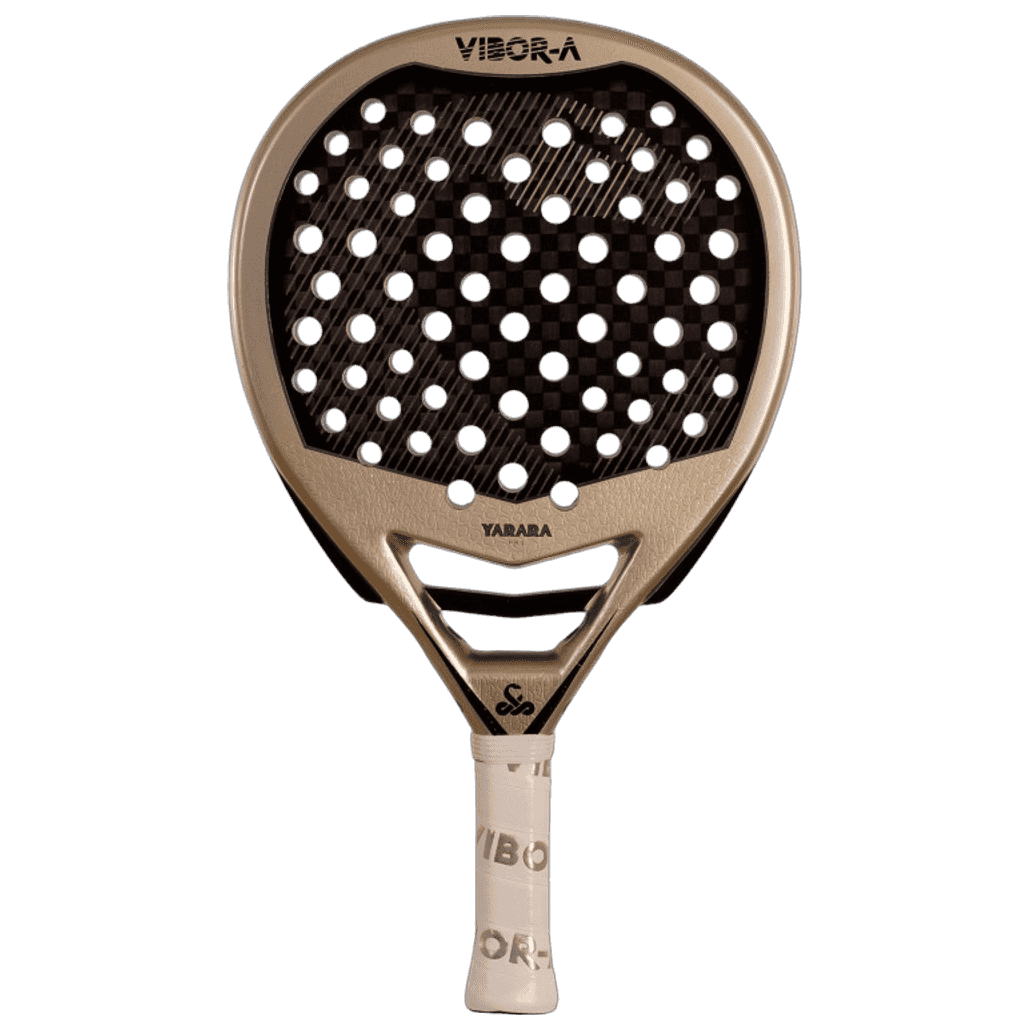
Vibora Yarara Pro Bifid 2027 is a control-first racket with enough firmness to keep the ball moving through the court. Its tear shape and medium-hard feel put it in the hands of players who want to build points with placement, then accelerate when the opening is there.
I found it more composed than explosive. It does not hand out easy power, but it gives a very clean, dependable response when I prepare early and hit through the ball.
This is not a soft, forgiving racket for passive defense. It rewards active technique and a player who likes to dictate height, direction, and pace.
Technical analysis
Shape & balance
The tear profile gives the Yarara Pro Bifid a useful middle ground between a round control racket and a head-heavy diamond. The low-medium balance keeps it quick through the air, yet the racket still carries enough mass to add weight to volleys and overheads.
Its maneuverability is one of the better parts of the design. I could adjust late on quick exchanges at the net without feeling that the head was dragging behind my hand. Still, the sweet spot is not huge in the way a round racket's can be. Contact near the upper edge loses some of the clean response, especially on defensive blocks.
Materials & construction
A carbon frame, 12K carbon faces, and the EVA Pro Balance + core produce a compact, direct strike. There is enough compression to help the ball leave the face without feeling springy, but the response stays controlled rather than overly lively.
The face feels firm when I flatten out a volley or drive a low ball from the baseline. That firmness also gives the racket good stability against hard incoming pace. The trade-off is clear: slow, short swings do not get much free help. I had to provide the acceleration on defensive lobs and balls taken low after the wall.
On-court feel
Baseline play
From the baseline, the Yarara Pro Bifid feels accurate and steady. I liked it most on blocks, controlled drives, and low-driven lobs where direction matters more than raw ball exit. The racket holds its line well and does not feel nervous when absorbing a heavy ball.
Off-the-wall play requires decent timing. Once I found the center, I could send a deep return with confidence, but it is less forgiving than a softer setup when contact is late or below knee height. Players relying on the racket to create easy depth will find it demanding.
At the net
At the net, it makes more sense. The firm faces give punch to compact volleys, and the tear shape lets me accelerate through the ball without losing too much precision. I could press a volley into the feet of the opposing net player, then change direction cleanly on the next ball.
Touch shots need a lighter hand. A drop shot or chiquita can come off a little too firm if I use the same grip pressure as on a blocking volley. This racket favors intentional contact over delicate, improvised touch.
Bandeja and víbora
The Yarara Pro Bifid is particularly convincing on the bandeja and víbora. Its balance supplies enough head speed to shape the ball, while the medium-hard response keeps the trajectory predictable. I could hit a deep bandeja without the face feeling vague, then add pace to a víbora when I had space.
It is not a pure smash racket. A clean smash carries good weight, but players looking for effortless put-away power or maximum head-heavy leverage will get more from an aggressive diamond model.
Conclusion
I would point advanced intermediates and experienced players toward this racket if they value control under pressure and play a proactive game at the net. It has the stability for firm volleys, the speed for overhead variations, and a response that rewards deliberate shot selection.
The trade-off is forgiveness. The medium-hard construction asks for proper preparation in defense, and it will not rescue late contact with easy ball exit. For players who generate their own pace and prefer precision over free power, that is a reasonable exchange.
Switch Intelligence
Be the first to share where you switched from.
Community reviews
Real feedback from players who used this racket.
Add your review
To submit your review, log in first. You can still read all approved community reviews below.
Add review


