

Wilson Defy LS V1 SE 2026
A fast, light diamond that sharpens volleys and spin, bringing attacking intent without the fatigue of a heavier hammer.
Last seen price · 26 AugSEK2495
See stores
Are you a store owner? Join our platform to be featured here.
Shape
Diamond
Weight
355 - 365 gr
Core
Power Foam
Faces
Comfort Flex
Frame
Carbon
What we like
- Quick reaction volleys at net
- Easy spin on *víboras*
- Lively ball exit on blocks
What we don't
- Less authoritative smash finish
- High rebound complicates defensive touch
- Less firm blocks against heavy pace
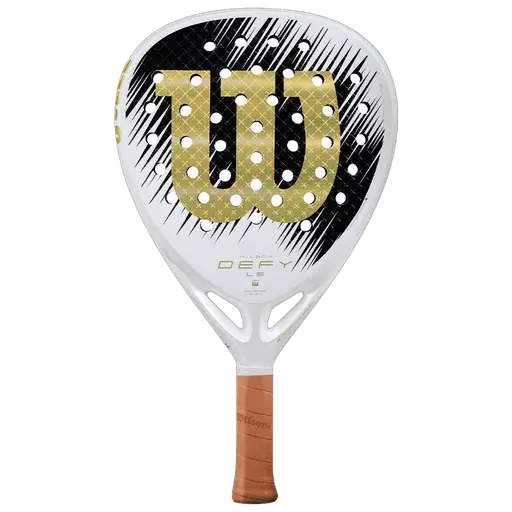
Wilson Defy LS V1 SE 2026 is the quick, light-footed attacking racket in the Defy range. It carries a diamond shape, but it does not behave like a cumbersome power racket that needs a full swing on every ball.
I see it fitting attacking intermediate and advanced players who want to be fast at the net, generate spin without forcing the wrist, and stay fresh through long sets.
Its trade-off is clear: this is not the Defy for players chasing maximum smash output. The heavier versions should give you more mass through the ball.
Technical analysis
Shape & balance
The diamond profile puts the sweet spot slightly higher than on a round racket, so I still feel its attacking intent on volleys, overheads, and aggressive returns. That said, the handling is unusually quick for this shape. Court testing and player feedback consistently point to the LS as the fastest-moving Defy, and that makes sense in fast hand exchanges.
The balance is high, but the low weight keeps it manageable rather than cumbersome. I can get the racket into position quickly for blocks, reaction volleys, and late adjustments at the net. Players coming from a round or hybrid racket will still notice the more attack-oriented head shape, especially on defensive lobs under pressure, but the transition is not punishing.
Materials & construction
Wilson uses a carbon frame, Comfort Flex faces, and a Power Foam core. That combination gives the racket a lively response rather than a dense, hard-carbon feel. Ball exit is very high; with a compact swing, the ball gets moving quickly.
The faces also help produce bite without making the racket feel overly stiff. I would not call the response ultra-precise, though. The sweet spot is respectable, not expansive, and off-center contact can send the ball out faster than intended. Players who rely on soft touch and very measured defensive placement may prefer a calmer core.
On-court feel
Baseline play
From the baseline, the easy ball exit is useful when I am defending deep or trying to lift a low ball after the glass. It helps on compact blocks and controlled counterattacks, particularly when there is not much time to load the shot.
Still, this is not a racket that naturally slows the game down. On a slow defensive lob or a delicate drop shot, I need a relaxed hand because the Power Foam can add more rebound than I asked for. It rewards active positioning and clean contact more than passive defense.
At the net
This is where the Defy LS makes its case. Its maneuverability lets me play quick volleys without feeling late, and the response gives enough penetration to pressure opponents without taking a huge swing. Multiple court reviews specifically praise its volley speed and easy spin, and I found that believable: it comes around quickly on short, sharp contact.
It also works well for a chiquita played from near the net, where getting the face under the ball quickly matters. The racket is agile, but not flimsy. It has enough stability for firm blocks, just not the heavy, crushing contact of a more head-heavy attacking frame.
Bandeja and víbora
The lighter handling helps me accelerate through a bandeja and shape a víbora without overworking the shoulder. Spin is accessible, and changing direction late feels natural. The racket favors speed of preparation over brute force.
Conclusion
I would choose this Defy for an attacking player who values fast hands, active net play, and a racket that does not drain the arm over a long match. It is particularly convincing for players who build points with volleys, spin, and overhead placement rather than trying to finish every lob with raw force.
The compromise is maximum punch. A clean smash will still have pace, but players accustomed to heavier diamond rackets may find the finish less authoritative. Its high rebound also demands touch in defense.
What other reviewers say
- Fabio Ferroit
After court testing, the reviewer especially highlights its quick handling, volley performance, and ease of producing spin. He frames it as the easiest and fastest-moving Defy compared with the heavier versions.
- Zona de Padelen
The guide positions the LS as the lightest, most maneuverable Defy SE: an attacking racket that speeds up reactions at the net and helps preserve freshness in long matches. It retains enough power for aggressive volleys and smashes, but favors ease of movement over the heavier models' punch.
- Racketguide.comen
The only written review from an advanced player calls it well balanced but short on power. That suggests its punch may feel less forceful to players expecting the output of a heavier attacking racket.
Switch Intelligence
Be the first to share where you switched from.
Community reviews
Real feedback from players who used this racket.
1 review

Add your review
To submit your review, log in first. You can still read all approved community reviews below.
Add review


