

Adidas Cross IT Light Pro EDT 2026 Martita Ortega
A light, composed round racket that turns defensive pressure into placement, with quick hands at the net and modest finishing weight.
Our Take
Recommended retail price €360 From €247 at 2 stores
Updated on 18 Nov



Updated on 18 Nov (shipping cost not calculated)


Are you a store owner? Join our platform to be featured here.
Shape
Round
Weight
345 - 360 gr
Core
EVA Soft Energy
Faces
24K Aluminized Carbon
Frame
Carbon Fiber
What we like
- Forgiving sweet spot on defense
- Quick handling in net exchanges
- Clean ball exit from baseline
What we don't
- Limited power on x3 smashes
- Less stability against heavy pace
- Volleys lack penetrating weight
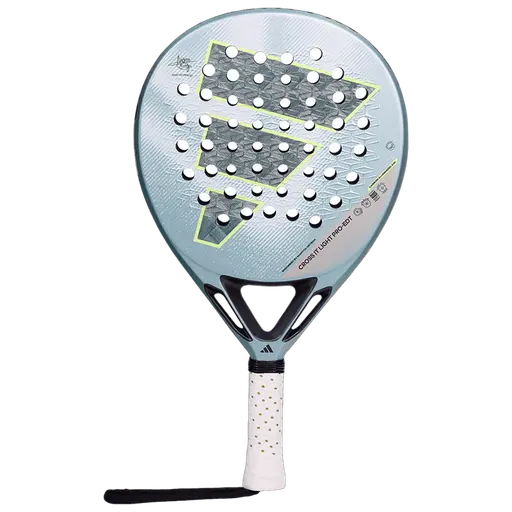
The Adidas Cross IT Light Pro EDT 2026 Martita Ortega is a control-first racket that plays fast through the air and makes defensive padel feel less rushed. I see it as a placement racket with enough attacking access to keep opponents honest, not a racket built around finishing points by force.
Its light, comfortable character is apparent from the first exchanges. It wants you to construct the point, defend accurately, and take the net with clean hands rather than chase outright power.
Technical analysis
Shape & balance
The round shape gives this racket its broad, forgiving hitting area. Miss slightly toward the edges on a defensive pickup or a hurried block, and the response remains far more predictable than on a compact diamond racket. That forgiving sweet spot is a genuine strength, especially during long baseline exchanges.
A medium balance keeps it from feeling purely defensive. The head comes through quickly on volleys and overheads, while the longer-style Cross IT format provides a little extra leverage when I accelerate. Still, this is not head-heavy enough to create easy power. Players who rely on a heavy swing and a punishing smash may find it too restrained.
Materials & construction
The Carbon Fiber frame, Carbon Aluminized 24K faces, and EVA Soft Energy core produce a comfortable, lively response rather than a hard, dry impact. Its soft-to-medium feel gives the ball generous exit with a compact swing, which is useful when defending deep or playing a controlled lob under pressure.
That softer response also explains part of the trade-off. Against a very heavy incoming ball, the racket can feel less planted than a firmer, more head-heavy model. It does not collapse, but I noticed that it rewards clean preparation more than brute-force blocking.
On-court feel
Baseline play
From the baseline, this is where the racket makes the strongest case for itself. The maneuverability is excellent, and the ball comes off the face cleanly without needing a big backswing. I found it particularly forgiving on off-the-wall play, defensive lobs, and low-driven lobs where direction matters more than pace.
The large sweet spot helps on late contacts. That does not mean it turns poor technique into a good shot, but it gives you more margin when you are stretched or reacting quickly to a fast volley.
At the net
At the net, the quick handling stands out. Fast exchanges, short blocks, and angle changes feel easy to manage because the racket gets into position without dragging through the shot. I could take pace off the ball effectively, then use the open face to send a chiquita low at the opponent’s feet.
Volleys are controlled rather than heavy. You can accelerate through them, but the ball does not leave with the penetrating weight of a stiffer power racket. For players who win the net through placement and consistency, that is a fair trade.
Bandeja and víbora
The racket suits a spin-oriented bandeja very well. Its quick swing makes it easy to keep the ball low and direct it toward the fence or middle, while the softer core gives useful touch when you need to reduce pace.
A víbora is accessible too, though it favors shape and placement over a violent finish. I would not choose this racket for repeatedly forcing winners from overhead positions.
Conclusion
I would recommend this to intermediate and advanced players who value defense, quick reactions, and controlled net play. It suits a player who builds points patiently, uses the lob well, and wants a comfortable racket over long matches.
The trade-off is clear: raw finishing power is limited. If your game depends on effortless x3 smashes or overpowering opponents with heavy volleys, look elsewhere. If you want speed, forgiveness, and reliable ball exit, this is a very convincing control racket.
What other reviewers say
- Padeleaes
This test finds it notably easy in defense, with clean ball output from the back court, a forgiving sweet spot, and a light, quick swing. It controls blocks and spin-oriented bandejas well at net, but lacks the finishing punch for players who rely on power smashes.
- PadelTestLabes
The assessment characterizes it as an exceptionally maneuverable, comfortable control racket with strong ball output, forgiveness, and precision. Its medium balance supplies a useful attacking outlet, though it lacks raw power for x3 smashes and the light build can lose stability against very heavy incoming shots.
- Padel Reviewen
This review recommends it for players who build points through placement: it retains the large sweet spot and defensive ease of a round racket, while the medium balance and longer handle add a genuine attacking option. It also emphasizes a light, comfortable feel that is arm-friendly over long matches.
Switch Intelligence
Be the first to share where you switched from.
Community reviews
Real feedback from players who used this racket.
Add your review
To submit your review, log in first. You can still read all approved community reviews below.
Add review


