

Babolat Technical Veron 3.1 2027 Juan Lebron
A manageable diamond with easy depth and a firm net block, keeping its attacking edge without demanding a flawless swing.
Our Take
Shape
Diamond
Weight
350 - 370 gr
Touch
Medium
Core
Black EVA
Faces
Carbon Flex
Frame
Carbon
What we like
- Easy depth from compact swings
- Firm, deep net blocks
- Manageable diamond in defense
What we don't
- Reduced sweet spot on mishits
- Full-swing volleys can sail
- Limited authority on flat smashes
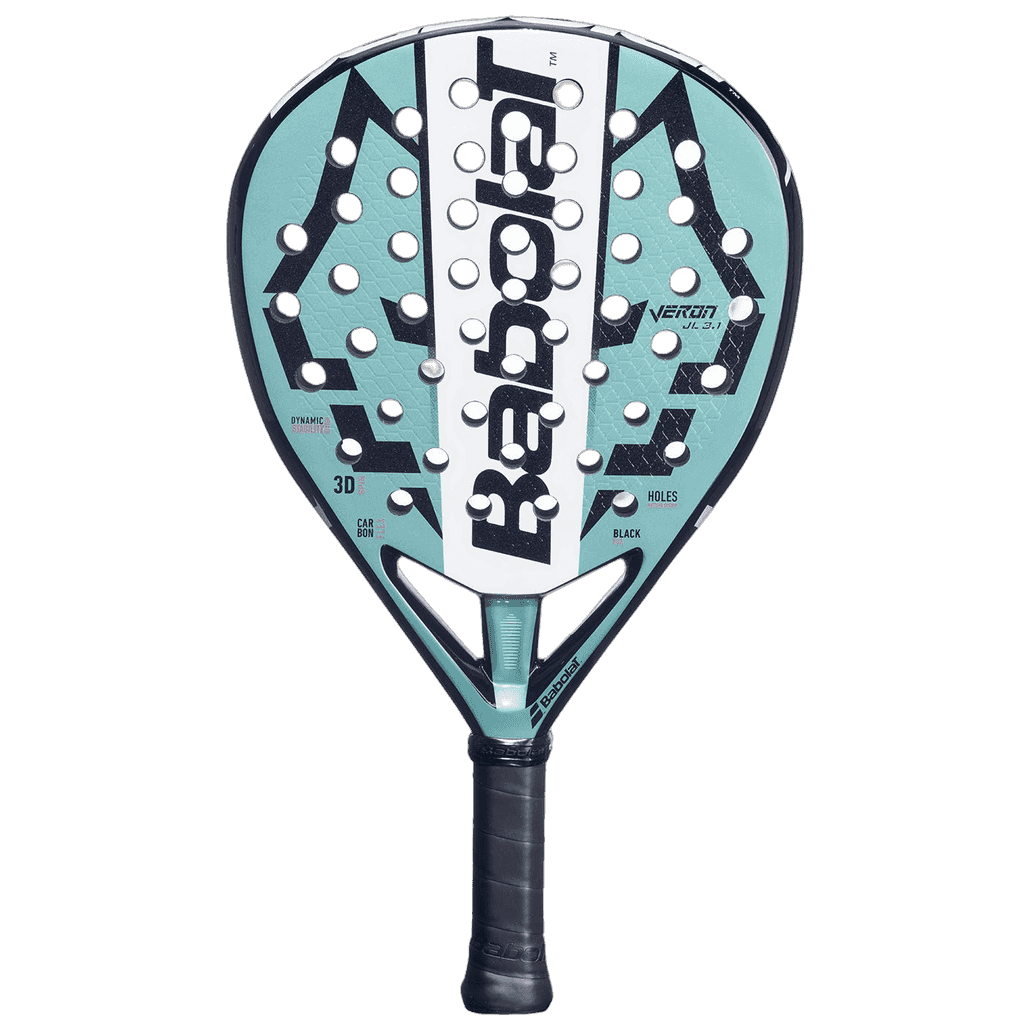
Babolat Technical Veron 3.1 2027 Juan Lebron is a diamond racket that plays more forgivingly than its outline suggests. It still wants to attack, but it does not punish you as hard from the baseline as many head-heavy diamonds do.
I see it for upper-intermediate and advanced players who build points with pressure rather than trying to finish every ball flat. It generates easy depth, feels dependable in blocks, and has enough speed through the air for active net play.
The trade-off is precision at the edges of its sweet spot. It will help you accelerate, but it will not mask late contact or turn every full swing into a clean winner.
Technical analysis
Shape & balance
The diamond shape puts the hitting zone slightly higher and gives the racket its attacking bias. There is enough forward balance to load a volley, bandeja, or víbora without making the head feel excessively slow during defensive exchanges.
That balance also explains its limits. Contact high on the face or away from the center loses authority more quickly than on a round or hybrid racket. I would not call it a large, forgiving sweet spot; it is usable, but you need clean preparation when the pace rises.
Materials & construction
The construction combines a carbon frame, Carbon Flex faces, and a Black EVA core. The result is a medium feel: firmer and more direct than a soft fiberglass racket, but with more ball pocketing than a hard, uncompromising carbon model.
In practice, the faces provide accessible ball exit from compact swings. I found that useful on blocked returns and off-the-wall balls, where the racket helps carry the ball deep without demanding a huge motion. The response is not especially plush, though. Touch shots need a measured hand rather than a loose, cushioning face.
On-court feel
Baseline play
This is one of the more approachable parts of the racket. From the baseline, I can block firmly and send a defensive lob with decent depth without feeling like the diamond balance is dragging my wrist behind the ball. On off-the-wall play, the medium response gives enough rebound to get out of trouble with a short swing.
Still, it is not a defensive specialist. A low defensive ball struck outside the sweet spot can come off flat and short, and delicate drop shots are harder to judge than with a softer, lower-balanced racket. The racket rewards a positive, structured stroke more than passive touch.
At the net
At the net, the Technical Veron feels stable on firm blocks and punch volleys. It moves quickly enough to react in fast exchanges, while the face gives the ball a deep, controlled trajectory when I keep the swing compact.
I would be careful with full-swing volleys. The easy ball exit can send the ball long if I over-accelerate or open the face too much. This is better for driving through the ball than for feathering it into the corners with minimal input.
Bandeja and víbora
The racket suits overhead pressure well. On a bandeja, it produces a reliable, deep ball without requiring an overly rigid swing. The víbora benefits from the higher contact point and direct response, especially when I want to keep opponents pinned after their lob.
Its ceiling on the smash is lower than a harder, more demanding racket. There is useful help on kick and controlled power, but flat smashes do not carry the same heavy finish when the point needs maximum authority.
Conclusion
I would choose this racket for an attacking player who still spends plenty of time defending and wants a diamond that remains manageable in blocks, lobs, and off-the-wall play.
It trades outright smash power and fine touch for easier depth and a more forgiving medium response. Players who rely on delicate drop shots or consistently miss the center of the face may prefer a rounder shape with a broader sweet spot.
What other reviewers say
- PadelVerdictit
It characterizes the racket as an unusually manageable diamond shape in defense, retaining control on blocks and offering accessible depth off the glass while helping on smashes and víboras. Its limit is the typical diamond-shaped sweet spot: high or off-center contact loses punch, and outright finishing power falls short of the Viper.
Switch Intelligence
Be the first to share where you switched from.
Community reviews
Real feedback from players who used this racket.
Add your review
To submit your review, log in first. You can still read all approved community reviews below.
Add review


