

Babolat Technical Viper Soft 3.1 2027 Juan Lebron
A lively diamond with deep blocks and authoritative overheads, but it asks for a committed swing before the smash truly puts the point away.
Our Take
Shape
Diamond
Weight
355 - 375 gr
Touch
Medium
Core
Black EVA
Faces
Soft Carbon
Frame
Carbon
What we like
- Deep, stable blocks under pace
- Generous sweet spot for diamond
- Heavy flat smash penetration
What we don't
- Firm, dry impact feel
- Needs full swing to finish
- Lively response can run long
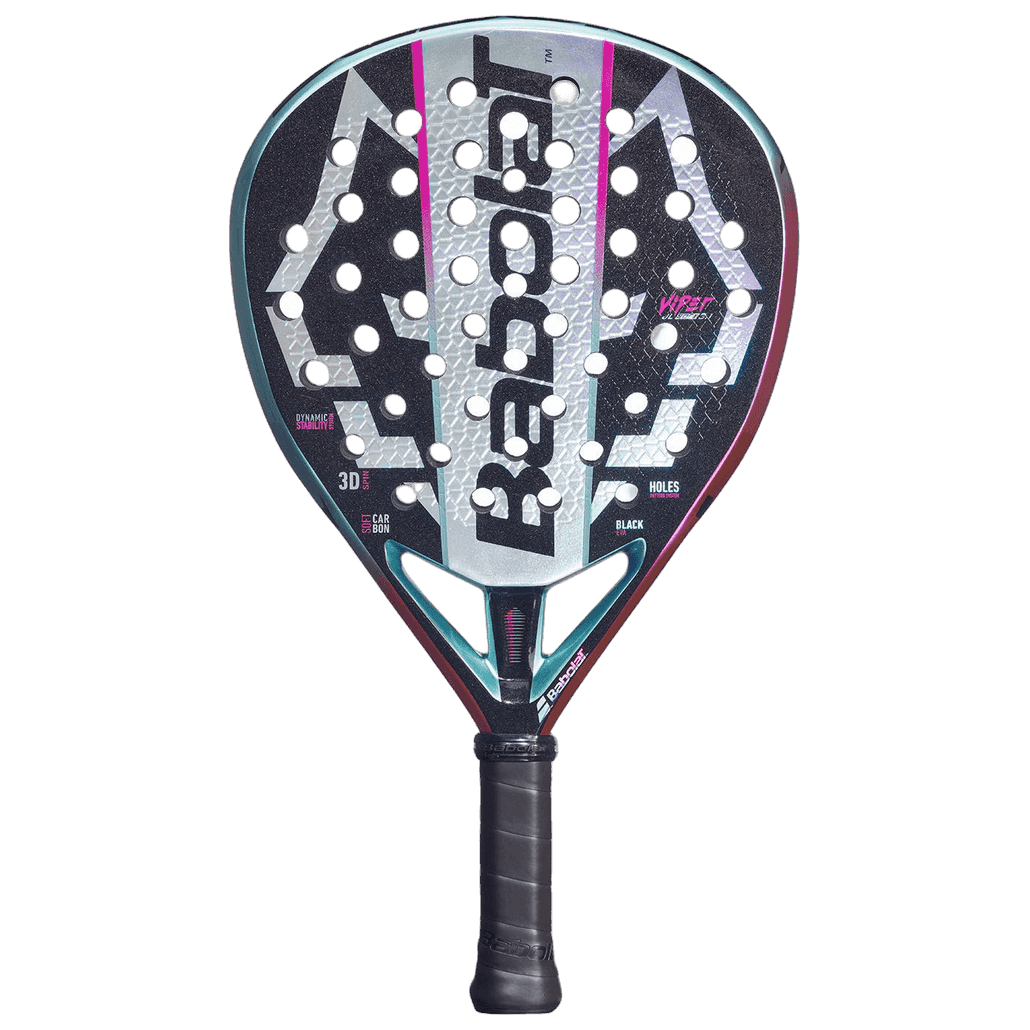
The Babolat Technical Viper Soft 3.1 2027 Juan Lebron is an attacking diamond that is easier to live with than its name suggests—but not actually soft in the plush, muted sense. I found it to be a firm, quick-response racket with enough help in defense to keep it from becoming a specialist-only weapon.
It suits an intermediate-advanced player who wants to press at the net and hit overheads with intent, while still getting useful depth from blocks and late contacts at the baseline.
The compromise is clear: it does not have the effortless finishing gear of a harder Technical Viper, and its response can get a little lively when I overhit.
Technical analysis
Shape & balance
Its Diamond shape and high balance put the working area toward the top of the racket. That is noticeable on volleys, overheads, and flat smashes: once I get the racket moving through the ball, it produces a heavy, penetrating shot without feeling sluggish in preparation.
The listed Medium feel is broadly fair in terms of output, but I would not call the impact soft. There is a dry, fairly direct contact that some players will read as firm or even slightly wooden. I liked that clarity on blocks and controlled volleys. Players who want a cushioned, forgiving sensation on every contact may not.
Materials & construction
The Carbon frame gives the racket a stable structure, especially when I am absorbing pace at the net. The Soft Carbon faces and Black EVA core add more ball exit than I expected from a high-balance diamond, which is why defensive blocks can still travel deep without a huge swing.
That extra exit is useful, but it needs management. On fast volleys or a full-blooded forehand from the baseline, the ball can leave the face sooner than expected and run long. This is not a racket that automatically rewards a loose wrist or an open face.
On-court feel
Baseline play
From the back of the court, this Viper Soft is more cooperative than the standard harder Viper profile. I could defend late, send a playable lob under pressure, and get decent length from compact blocks. Off-the-wall play feels stable rather than hollow, which matters when the ball arrives fast and low.
Still, I would not pick it for passive defense. The high balance asks for sound preparation, and the firm contact does not hide poor timing. A defensive lob needs a committed lift rather than a casual flick.
At the net
This is where the racket makes the most sense. It stays composed through firm volley exchanges, and I could block hard balls deep or accelerate a shorter volley without the frame twisting. The sweet spot feels generous for a diamond, particularly compared with more demanding power rackets.
Touch shots are less natural. A chiquita or drop shot is possible, but I needed softer hands than with a lower-balance control racket. The response is direct, not delicate.
Bandeja and víbora
On the bandeja, I found a reliable blend of depth and control. The racket carries the ball well enough to keep opponents pinned without demanding maximum arm speed. A víbora comes off with good pace too, although the drier face favors a clean, committed contact over a brushed, improvised one.
Smash
Flat smashes are strong. The frame transfers energy well, and the high balance helps drive the ball through the court. But it does not produce free winners from a half swing. To get the final burst, I had to accelerate fully and strike cleanly.
Conclusion
I would recommend this to players who attack often but do not want the usual punishment of a demanding diamond racket in defense. It brings stable blocks, useful ball exit, and serious overhead weight without feeling as unforgiving as the harder Viper versions.
What you trade away is absolute precision, a little stability, and top-end smash power. The feel can also be firmer than “Soft” suggests. For players who prefer a plush touch or who rely on delicate control at slower speeds, there are friendlier options.
What other reviewers say
- PadelVerdictit
This review highlights unusually good comfort and playability for a diamond racket: blocks travel deep and late defensive contacts remain playable. The trade-off is that its smash lacks the final gear of the hard Viper and needs a full swing to finish points.
- Tennis Tonicen
The tester found it surprisingly hard, almost wooden at impact despite the Soft name. Even so, it delivered strong baseline control, very stable blocks and serious overhead power; compared with the standard Viper, it gives up a small margin of precision, stability and control.
Switch Intelligence
Be the first to share where you switched from.
Community reviews
Real feedback from players who used this racket.
Add your review
To submit your review, log in first. You can still read all approved community reviews below.
Add review


