

Bullpadel Impulse PWR 2026
A comfortable, head-heavy diamond that brings easy pace and a heavy finish, asking for early hands when the point turns fast.
Our Take
Shape
Diamond
Weight
360 - 370 gr
Core
SoftEva
Faces
Polyglass
Frame
CarbonTube
What we like
- Easy ball exit on blocks
- Heavy high-contact smashes
- Comfortable impact, easy on the arm
What we don't
- Slow in rapid volley exchanges
- Low glass pickups need preparation
- Limited touch-shot modulation
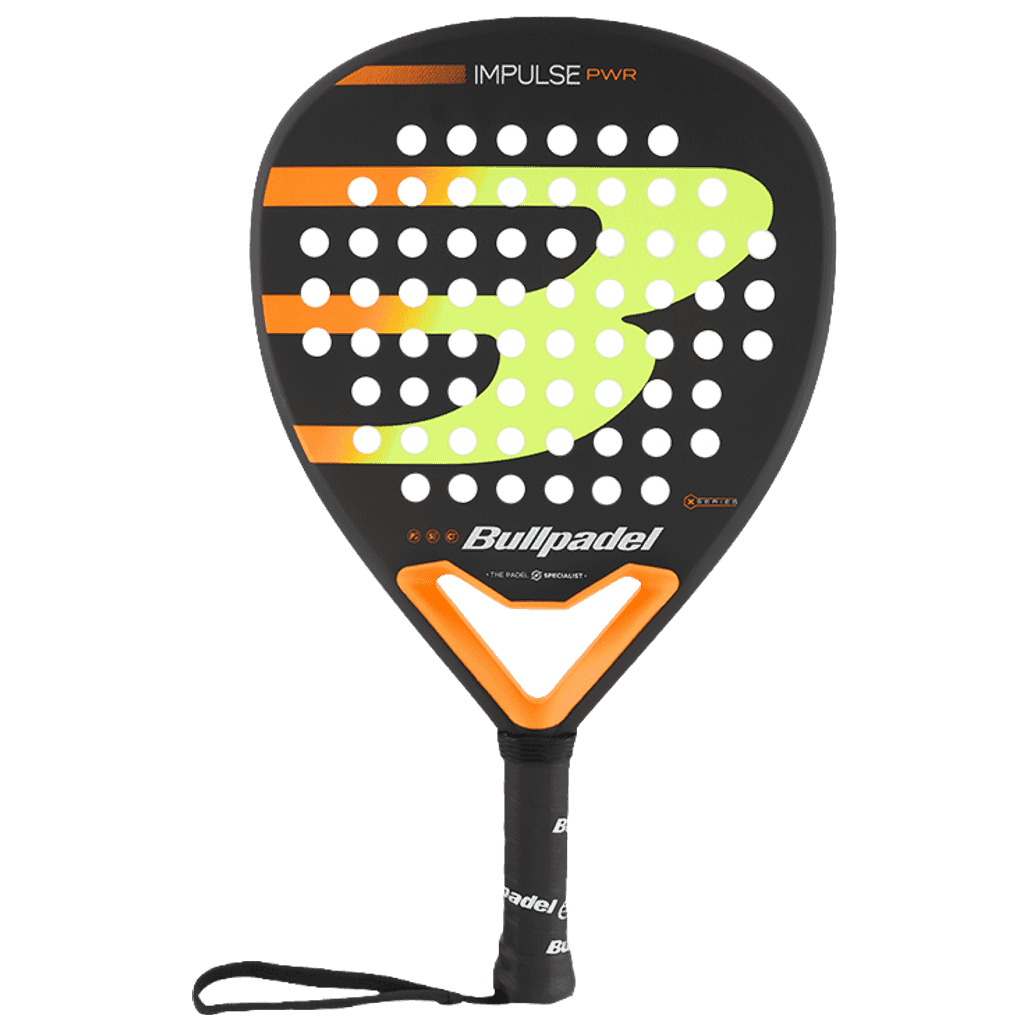
The Bullpadel Impulse PWR 2026 is a power-first racket with a surprisingly comfortable response. I see it as an accessible attacking option for players who want easy pace without needing a huge swing.
It is not a precision instrument. Its job is to help the ball leave the faces quickly, hit heavy from high contact, and make aggressive padel feel less demanding on the arm.
Technical analysis
Shape & balance
The diamond shape and head-heavy balance explain most of its behavior. The sweet spot sits relatively high, which suits overheads and attacking volleys, but it also means low contacts need more care. Catch the ball below the sweet spot or late near the glass, and depth drops off faster than with a round or lower-balanced racket.
I felt that balance most during fast exchanges at the net. Once the racket is prepared, it carries plenty of momentum through the ball. But it is not especially quick to reposition for reflex volleys, body shots, or last-second blocks. Players with compact preparation will get more from it than players who rely on late hands.
Materials & construction
Bullpadel uses a CarbonTube frame, Polyglass faces, and a SoftEva core. Bullpadel states no hardness, but on court that construction feels soft and cushioned rather than dry or overly rigid. It absorbs vibration well, and the ball exit is immediate even when I am not hitting through the shot aggressively.
The trade-off is shot modulation. The soft core helps defensive blocks and stretched returns travel, but it does not give the crispest feedback for very fine placement. I could play touch shots, but I had to slow my hand and stay disciplined; the racket naturally wants to add a little more rebound than I sometimes asked for.
On-court feel
Baseline play
From the baseline, the Impulse PWR is forgiving in one important way: it helps the ball get moving. On defensive lobs, blocks, and off-the-wall returns, I did not need a long swing to find depth. That easy ball exit can be useful when the point is rushed or I am defending from an uncomfortable position.
Still, I would not call it a calm defensive racket. Its head-heavy setup is noticeable on low pickups by the glass, especially when I am late. The response is helpful, but maneuverability is only average, so preparation matters. A controlled low-driven lob is possible, though I found it less natural than simply lifting the ball deep.
At the net
At the net, it rewards early preparation. Firm volleys come off the faces with good penetration, and the soft core adds pace without making contact harsh. I liked it for attacking the middle or pressing a slower ball toward the fence.
Quick reactive exchanges are less comfortable. If the opponent speeds up the volley battle, the head can feel slow to move from forehand to backhand. This is not the racket I would choose for constant hand-fighting at close range.
Bandeja and víbora
The racket makes an aggressive bandeja and víbora easy to produce. Its balance helps carry the stroke through contact, while the rebound gives the ball speed even with a shorter action. I found it particularly effective when driving the ball low and deep rather than trying to shape every shot with maximum spin.
Smash
The smash is its most convincing area. Flat smashes, x3 attempts, and high-contact finishes benefit from the easy acceleration and heavy ball it produces. It will not create technique for you, but it does not demand a huge swing to generate convincing pace.
Conclusion
I would put the Impulse PWR in the hands of an intermediate player who attacks regularly and wants a softer, more comfortable alternative to a hard power racket. It suits players who like to finish points with smashes, pressure with víboras, and get free depth from defensive blocks.
The compromise is clear: fine control and quick handling are not its strongest qualities. If your game depends on late reactions, delicate touch, and low defensive pickups, a more maneuverable, lower-balanced racket will feel easier.
What other reviewers say
- PadelTestLaben
This review finds it especially effective on flat smashes, x3s, and víboras, producing rapid ball exit and heavy shots without requiring a long swing. In return, the head-heavy balance hurts low defensive pickups by the glass and rapid volley exchanges.
- AvisPadelfr
The analysis highlights exceptionally easy ball exit and a soft, arm-friendly feel, helping players return balls from the back even when stretched. Smashes are reliable, but volleys demand early preparation and the racket offers more punch than touch control.
- PalaRadar (reseñas de compradores verificadas)es
One verified buyer reports feeling comfortable from the first match, with easy ball exit and enough control without having to hit especially hard. That feedback supports the view that it is accessible for regular recreational play.
Switch Intelligence
Be the first to share where you switched from.
Community reviews
Real feedback from players who used this racket.
Add your review
To submit your review, log in first. You can still read all approved community reviews below.
Add review


