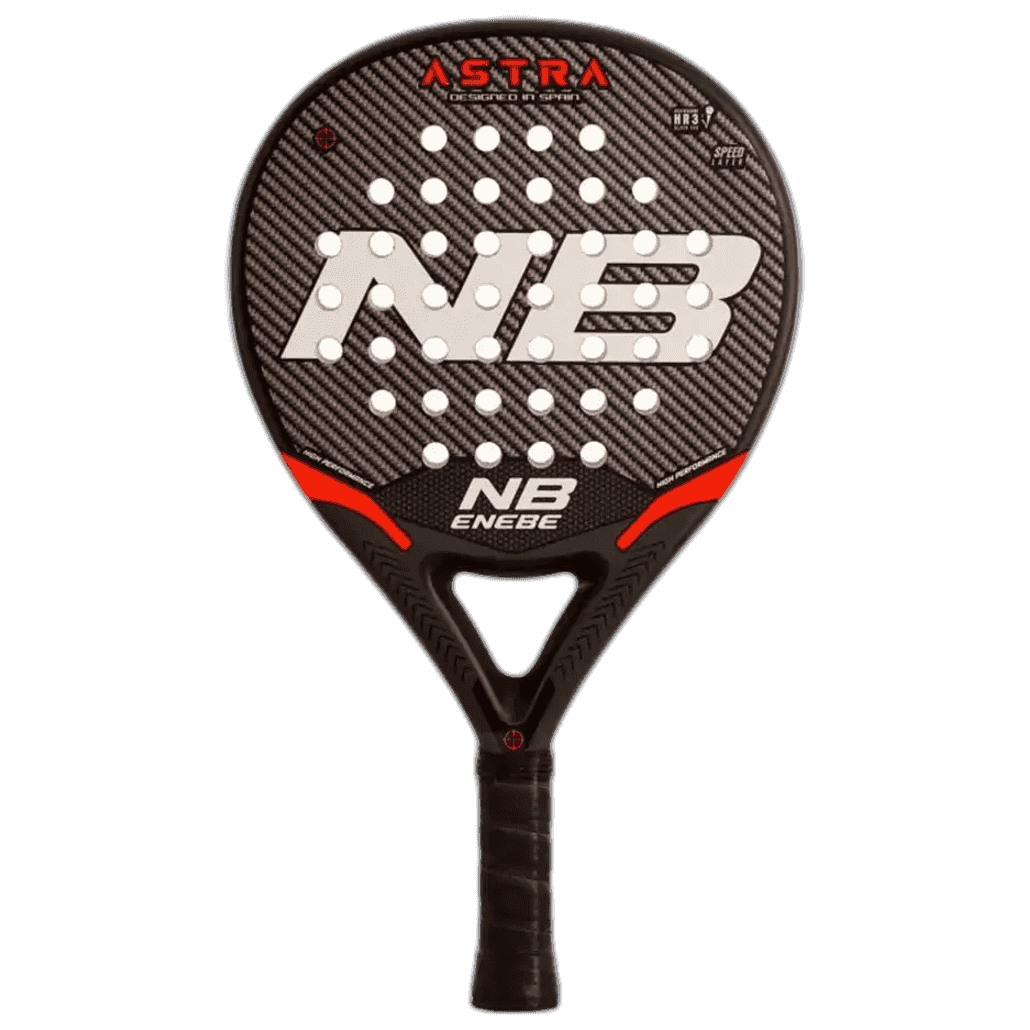
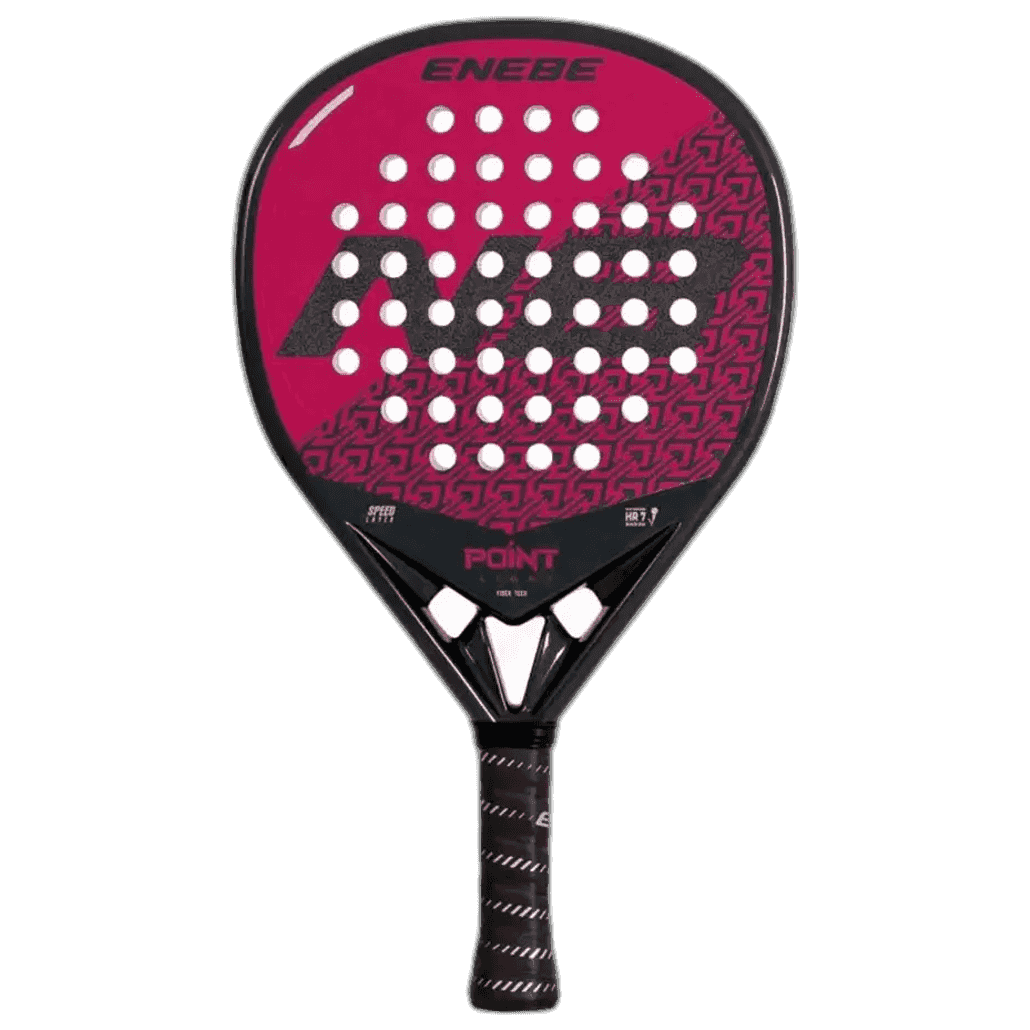
Enebe Point Light 2026
A soft-feeling control racket with easy ball exit, built to keep defense calm and point construction tidy rather than chase raw pace.
Our Take
Shape
Tear
Weight
355 - 370 gr
Touch
Medium-Soft
Core
EVA Soft
Faces
Fiberglass
Frame
Carbon fiber
What we like
- Easy ball exit under pressure
- Comfortable, arm-friendly medium-soft feel
- Controlled *bandeja* and *víbora*
What we don't
- Limited punch at the net
- Smashes need your own technique
- Sweet spot is not huge
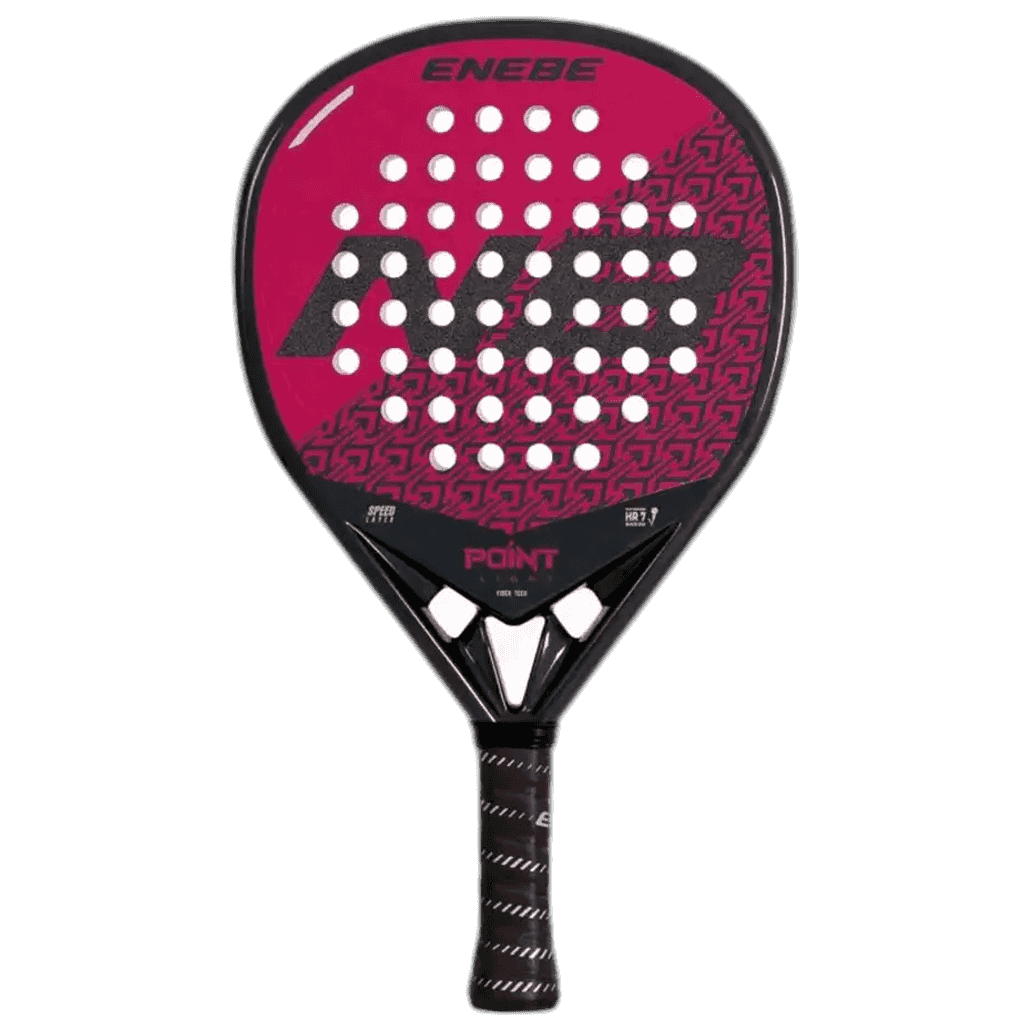
Enebe Point Light 2026 is one of those rackets that makes its intentions clear very quickly. It lives in the comfort zone first: easy ball exit, a medium-soft response, and enough control to keep rallies tidy without feeling stiff in the arm.
I see it as a racket for players who build points from the back, defend a lot, and want help getting the ball out of trouble. It does not chase raw power. If your game depends on finishing everything with explosive pace, this one will feel restrained.
Technical analysis
Shape & balance
The tear shape gives it a familiar all-round silhouette, but the balance sits in a way that keeps the racket more about handling than punch. That shows up straight away in transitions. I can move it around without fighting the frame, though it does not have that ultra-fast snap you get from a lighter-feeling, more head-light racket.
It feels honest in the hand. Stable enough for controlled rallies, but not especially lively when the pace jumps. That matters because the sweet spot is usable rather than generous. You can work with it, but it asks for decent contact.
Materials & construction
The fiberglass faces and fibra de carbono frame are a big part of the personality here. Fiberglass softens the response and adds comfort, while the carbon in the frame keeps the structure from feeling vague. The result is a racket that absorbs a lot of the hard work for you without turning mushy.
The EVA Soft core finishes the job. Ball exit is easy, especially when you are under pressure at the baseline or blocking with little preparation. What you do not get is a sharp, explosive rebound. The feel is more forgiving than aggressive, and that is the trade-off throughout the build.
On-court feel
Baseline play
From the back of the court, this racket is comfortable and predictable. Defensive lobs come out with little drama, and I like how it lets the ball leave the faces even when I am late. That makes it easier to reset points instead of forcing low-margin swings.
It is also kind on the arm. After a long session, that medium-soft response matters. What it does not give me is much extra help on heavy topspin drives or sudden acceleration. If I try to force the pace from the baseline, the racket asks me to do the work myself.
At the net
Up front, it handles blocks and controlled volleys well. I can keep the ball low and place it without the racket fighting back. In slower exchanges, that feels solid. In faster volley-to-volley rallies, though, the lack of explosiveness shows. It is not the quickest racket for turning defense into instant pressure at the net.
That same restraint affects finishing. I can guide the ball, but I do not get a huge surge off the face. If I want to close points early, I need clean technique and good timing.
Bandeja and víbora
This is probably the area where the Point Light makes the most sense. It helps me stay controlled on a bandeja and keeps the víbora manageable without demanding perfect mechanics. The ball comes off cleanly enough to keep the opponent deep, and that easy output helps when I want to build the point rather than force it.
Still, it is more about placement than bite. I do not feel a huge aggressive kick in these shots. The racket supports them; it does not elevate them on its own.
Conclusion
The Enebe Point Light 2026 fits players who value comfort, control, and easy defense over outright aggression. If you spend a lot of time absorbing pace, lobbing well, and constructing points patiently, it makes sense.
What you trade off is obvious: less punch at the net, limited explosiveness on fast exchanges, and no special help on smashes. I would not reach for it if my main priority were finishing points hard and fast. I would if I wanted a forgiving, arm-friendly racket that keeps the game orderly.
What other reviewers say
- Padelfulen
The racket stands out for its medium-soft feel, easy ball output, and defensive comfort; it helps you build points with control more than it helps you finish with raw power. At the net and on smashes, it responds better to placement and technique than to explosive pace.
- Padelfules
The racket stands out for its medium-soft feel, easy ball output, and defensive comfort; it helps you build points with control more than it helps you finish with raw power. At the net and on smashes, it responds better to placement and technique than to explosive pace.
Switch Intelligence
Be the first to share where you switched from.
Community reviews
Real feedback from players who used this racket.
Add your review
To submit your review, log in first. You can still read all approved community reviews below.
Add review