

Kombat Mirage Pro 2026
A hard-hitting tear shape with a firm Black EVA response, made for players who finish overheads and still work the baseline.
Our Take
Shape
Tear
Weight
370 - 380 gr
Touch
Hard
Core
Black EVA
Faces
Rough 18K Carbon
What we like
- Heavy, direct smash response
- Precise punch volleys at net
- Rough faces add slice bite
What we don't
- Limited ball exit under pressure
- Moderate sweet spot off-center
- Slower in rapid hand exchanges
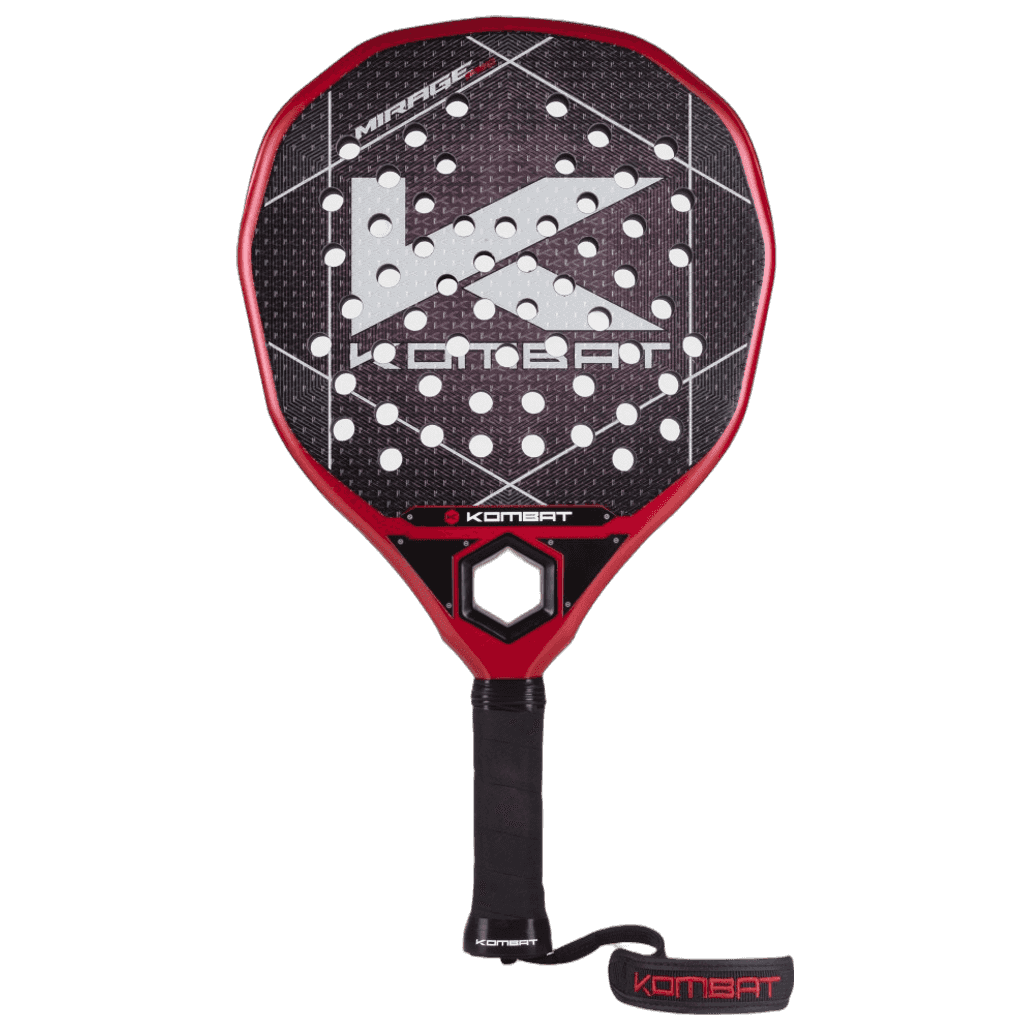
The Kombat Mirage Pro 2026 is a hard-hitting tear-shaped racket with a clear attacking bias. It is built for players who generate their own racket speed and want a firmer, more direct response rather than easy ball exit.
I see it as a racket for taking charge at the net and finishing overheads. It will reward clean contact. It will not hide late preparation or a loose defensive technique.
The hard feel is central to its character. This is not a soft, forgiving racket that gives the ball a free push from the baseline.
Technical analysis
Shape & balance
Its tear shape sits between the easy handling of a round racket and the more demanding profile of a full diamond. That gives the Mirage Pro a slightly more usable platform away from the net than a pure power racket, while still keeping enough mass in the upper area to hit through the ball.
The listed power focus suggests an attack-oriented balance, even if the tear mold should keep it from feeling completely head-heavy. I would expect quick enough preparation for volleys and víboras, but it will still need a committed swing to get the most from its overhead game. Players who prefer a very head-light racket for rapid hand exchanges may find it slower than they want.
Materials & construction
The 18K rough carbon faces and Black EVA core explain the firm, compact response. Carbon at this level usually gives a crisp contact point rather than a long dwell time, and the rough finish should provide useful bite on sliced volleys, bandejas, and controlled drop shots.
That construction also has a trade-off. The racket should feel stable and accurate when I strike through the ball, but the sweet spot is not especially broad on paper. Off-center blocks and rushed off-the-wall shots are likely to lose some pace and direction. Players used to fiberglass faces or a softer EVA will probably need an adjustment period.
On-court feel
Baseline play
From the baseline, I would use the Mirage Pro with a simple plan: prepare early, hit cleanly, and drive the ball with purpose. The firmer core should help me keep low-driven lobs and counterattacks from floating, while the tear shape offers more control than a top-heavy diamond on defensive transitions.
It is less accommodating when I am under pressure. A passive block will not get much help from the racket’s ball exit, and defensive lobs need proper lift from the legs and technique. This is not the sort of racket I would choose for relaxed, low-effort defense.
At the net
At the net, the direct response should be a strength. Firm faces tend to make punch volleys feel precise, especially when I want to keep the ball low and deep rather than overhit it. The rough surface should also help me take pace off with a short chiquita or add cut to a volley.
Quick reaction volleys are where the trade-off appears. The racket’s maneuverability is respectable, but not exceptional, so I would not expect it to feel effortless in frantic exchanges close to the body.
Smash
The Mirage Pro’s main attraction is its power ceiling. With a full, accelerated swing, the hard carbon-and-EVA setup should transfer energy cleanly into the ball and give the smash real weight. It looks more comfortable attacking a short lob than manufacturing power from a compromised position.
Players with a compact overhead technique may not access that ceiling consistently. It asks for timing, shoulder rotation, and clean contact; it does not produce easy power on its own.
Conclusion
I would put the Kombat Mirage Pro 2026 in the hands of an intermediate-to-advanced attacking player who likes a firm racket and is comfortable generating pace. It makes sense for someone who wants to press at the net, hit aggressive overheads, and play with a direct response.
The trade-off is forgiveness. The hard feel, moderate sweet spot, and likely attack-biased balance make defensive recovery shots more demanding. If I wanted softer touch, easier ball exit, or maximum speed in hand battles, I would look elsewhere.
Switch Intelligence
Be the first to share where you switched from.
Community reviews
Real feedback from players who used this racket.
Add your review
To submit your review, log in first. You can still read all approved community reviews below.
Add review


