

Nox AT10 Pro Cup Hard 2027 Agustin Tapia
A firm, lively tear shape that rewards committed swings on the volley and the smash, while its fiberglass face keeps the point playable.
Our Take
Shape
Tear
Weight
360 - 375 gr
Touch
Medium-Hard
Core
HR3 Hard EVA
Faces
Silver Fiberglass
Frame
Carbon
What we like
- Fast, penetrating volley response
- Stable blocks and deep lobs
- Directed *bandeja* with useful punch
What we don't
- Rushed defense gets little lift
- Slow *chiquitas* require soft hands
- Head feels slower resetting
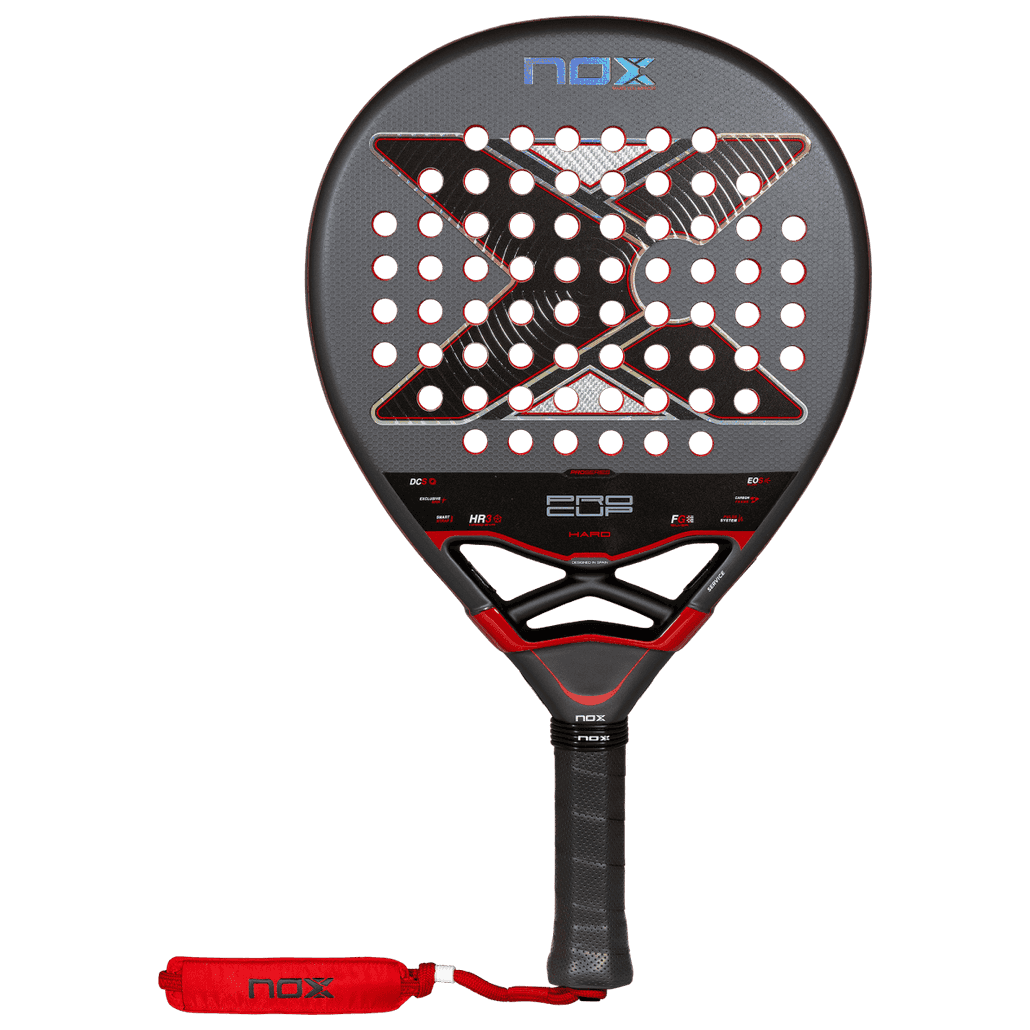
The Nox AT10 Pro Cup Hard 2027 Agustin Tapia is a direct, firm racket with enough help from its fiberglass faces to avoid feeling like a pure punishment tool. It wants an active swing and rewards clean contact with a fast, penetrating ball.
I see it fitting the intermediate-to-advanced player who attacks with intent but still spends plenty of time building points from the baseline. It is not a soft-touch racket, and it will not rescue lazy defensive contacts.
Technical analysis
Shape & balance
The tear shape gives this racket a useful middle ground between a round control model and a demanding diamond. The sweet spot is broad enough to keep volleys and blocks predictable. Nox publishes no balance figure, but on court the tear shape gives overhead shots some real presence.
It moves quickly for its offensive lean, though I still notice the head through repeated exchanges at the net. That helps the racket carry the ball through a firm volley or low-driven lob, but players who prefer a clearly head-light setup may find it slower to reset during frantic defensive points.
Materials & construction
Nox uses a Carbon frame, Silver Fiberglass faces, and an HR3 Hard EVA core. That combination explains much of the racket’s character: the frame and hard core keep the response stable and crisp, while the fiberglass adds a little more ball exit than I would expect from a fully carbon-faced hard racket.
The medium-hard feel is present from the first hit. It does not compress much on slow contacts, so touch shots need proper hands rather than just an open face. On the upside, the racket does not feel vague when I accelerate. There is a clean connection through the ball, especially on flat attacks and controlled spin.
On-court feel
Baseline play
From the baseline, this is a racket that asks me to prepare early. When I get behind the ball, it sends a quick, deep response and gives me enough precision to push a defensive lob or drive through an off-the-wall return. Blocks also come off with reassuring stability, provided I meet the ball in front.
The limitation appears under pressure. A rushed contact near the glass does not get much free lift from the core, and the racket can feel unforgiving if my timing is late. Players who rely on a soft racket to absorb pace and float the ball back will have to work harder here. Delicate drop shots and slow chiquitas are possible, but they require a softer hand than the racket naturally encourages.
At the net
This is where I enjoyed it most. The face produces a fast, piercing volley without becoming uncontrollable, and the sweet spot is forgiving enough for quick exchanges. I can block hard balls with a compact movement, then accelerate the next volley without feeling the racket twist.
The fiberglass face also gives useful bite for angled volleys and controlled spin. Still, it is not a plush net racket. If I try to deaden the ball too much, the hard core reminds me that it prefers a purposeful touch.
Bandeja and víbora
On a bandeja, the racket feels composed and easy to direct. It holds its line well through contact, with enough punch to keep opponents pinned back rather than simply returning the initiative.
The víbora benefits from the firm response and accessible spin. I found it easier to hit a fast, skidding ball than a slow, heavily shaped one. It favors penetration over exaggerated dwell time. The smash needs room to load and a fast arm, but then it has enough punch to go for a por tres.
Conclusion
I would choose this racket for an experienced player who wants a firm, fast response without going all the way into a demanding carbon attack racket. It suits an assertive style built around volleys, overhead control, and deep shots from the back of the court.
The trade-off is clear: it gives less assistance in rushed defense and less delicacy on slow-touch play than a softer model. Bring decent timing and acceleration, though, and it offers a controlled kind of aggression that makes sense across a full match.
What other reviewers say
- PadelTestLabfr
The analysis describes a quick, penetrating ball exit with controllable punch on smashes, blocked volleys, and spin shots. Its fibreglass face adds some assistance and forgiveness, but the hard core demands sound acceleration and timing, making it less forgiving in rushed defense and delicate slow-touch play.
Switch Intelligence
Be the first to share where you switched from.
Community reviews
Real feedback from players who used this racket.
Add your review
To submit your review, log in first. You can still read all approved community reviews below.
Add review


