

Osaka Vision Control 2026
A forgiving round racket with quick hands, easy depth, and the calm, soft response to build points without forcing them.
Our Take
Shape
Round
Weight
355 - 370 gr
Core
13-15 Black Touch EVA foam
Faces
Fiberglass
Frame
30% carbon-reinforced fiberglass frame
What we like
- Huge sweet spot on blocks
- Easy defensive lob depth
- Quick, controlled net handling
What we don't
- Limited smash finishing pace
- Lively response when accelerating
- Víboras lack penetrating bite
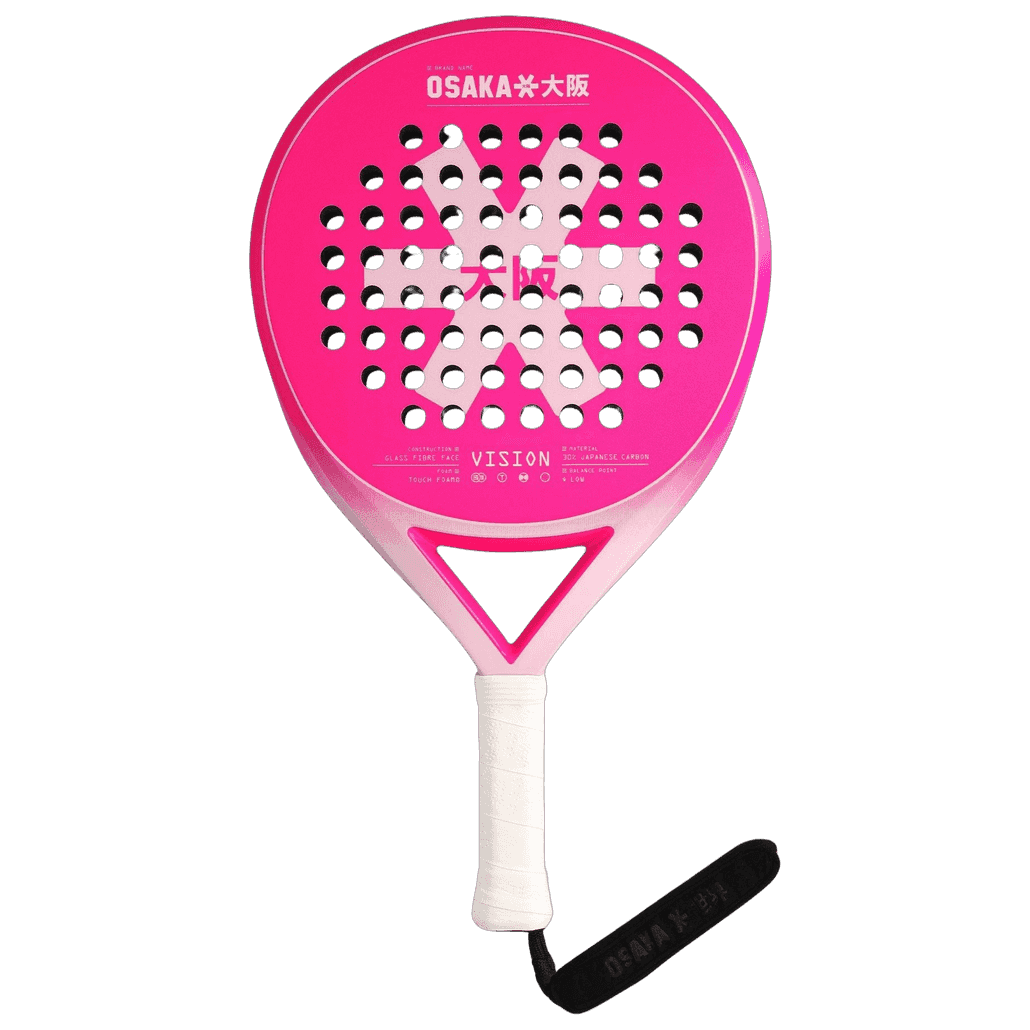
The Osaka Vision Control 2026 is a comfort-first racket built around placement, forgiveness, and easy handling. It does not ask me to overpower the ball; it helps me keep the point organized.
Its round shape and very large sweet spot give it a clear role for improving players and regular club players who want more consistency from the baseline and quicker reactions at the net.
Technical analysis
Shape & balance
The round mold puts the useful hitting area close to the hand, and that shows up immediately in defensive exchanges. I found it easy to square the face on blocks, return fast volleys, and guide a defensive lob without feeling that the racket wanted to pull through the contact zone.
Osaka has clearly aimed for maneuverability rather than a head-heavy attacking setup. That makes the Vision Control forgiving when contact is not clean, especially on rushed shots after the glass. The trade-off is obvious: there is less help from the racket when I need to generate a heavy, penetrating ball on my own.
Materials & construction
The construction combines a carbon-reinforced glass fiber frame, glass fiber faces, and a Black Touch EVA foam core. That is a sensible recipe for a racket that prioritizes comfort and ball exit over a crisp, hard-carbon response.
The faces should not be confused with a stiff carbon surface. They give the racket a more elastic, accessible response, which matches the strong rebound reported in independent testing. Soft hands are rewarded, and short swings still send the ball deep enough. On the other hand, players who want a dry, direct impact for aggressive volleys may find the response a little too lively.
On-court feel
Baseline play
From the baseline, this is where the Vision Control makes the most sense to me. The large sweet spot reduces the punishment for slightly late contact, while the easy ball exit helps on defensive shots where I am more concerned with buying time than forcing a winner.
Off-the-wall play is also approachable. I do not need to swing hard to get depth, and the racket responds well to a controlled block or low-driven lob. That comfort can become a limitation if I overhit: the softer, more reactive setup gives less of the locked-in precision I get from firmer carbon rackets when I really accelerate.
At the net
At the net, its speed through the air is a real advantage. Quick exchanges, backhand blocks, and compact volleys feel uncomplicated, and the generous sweet spot makes it easier to keep the ball low when the point gets messy.
I especially liked the confidence it gives on touch shots. A chiquita or a soft drop shot does not require an exaggeratedly delicate hand. Still, this is not a racket that naturally produces a heavy finishing volley. I can place the ball well, but I have to provide the acceleration myself if I want it to bite through the opposing pair.
Bandeja and víbora
The racket favors a controlled bandeja over an all-out víbora. Its maneuverability helps me set the face early and direct the ball toward the fence or middle with consistency. For players constructing points rather than rushing the finish, that is useful.
The faster, more aggressive víbora is less convincing. There is enough response to play it safely, but the faces do not give the same sharp, hard impact or penetrating pace that a more attack-oriented racket can provide.
Conclusion
I would choose the Vision Control 2026 for a player who values comfort, a huge sweet spot, and easy ball exit above raw finishing power. It suits players building reliable patterns from the baseline, defending under pressure, and taking control of the net through placement rather than force.
The compromise is straightforward. Its smash is not a major weapon, and aggressive overheads need more technique and arm speed than the racket supplies. For controlled padel with a forgiving response, though, its character is coherent and honest.
What other reviewers say
- PadelRacketReviews.comen
The review presents the Vision Control as a placement-first racket: control, comfort and a large sweet spot are its strongest traits, with solid maneuverability for improving players. Power is comparatively modest, so it suits constructing points and prioritizing accuracy rather than finishing through outright smash pace.
Switch Intelligence
Be the first to share where you switched from.
Community reviews
Real feedback from players who used this racket.
Add your review
To submit your review, log in first. You can still read all approved community reviews below.
Add review


