

Oxdog Hyper Woman Air 2.0 2026
A light, forgiving tear-drop built for fast hands, easy defense, and shaped shots, with enough pace for players who create their own power.
No store price yet
See similar racketsShape
Tear
Weight
345 gr
Touch
Medium
Core
Medium-density foam rubber
Faces
HES Carbon 18K Aluminized
Frame
HES Carbon
What we like
- Fast reflex volleys and reactions
- Forgiving sweet spot on blocks
- Easy *bandeja* depth and bite
What we don't
- Passive blocks lack heavy-ball authority
- Flat contact turns bouncy at pace
- Limited effortless smash penetration
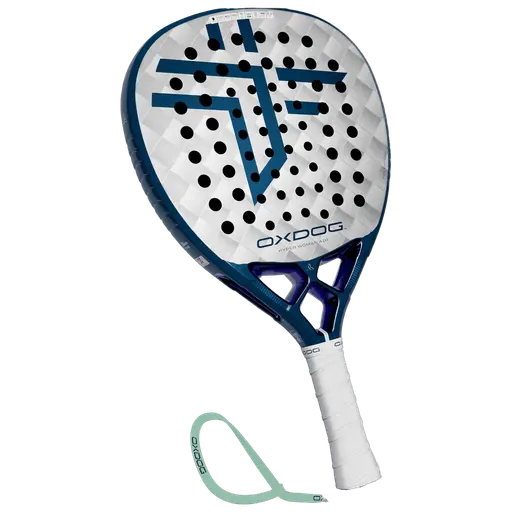
The Oxdog Hyper Woman Air 2.0 2026 is a quick, forgiving racket built around speed of preparation rather than brute force. I felt its character most clearly in defense and fast exchanges: it gets into position early, gives the ball an easy exit, and does not punish slightly late contact.
It suits an intermediate to advanced player who values maneuverability, comfort, and a broad margin on compact swings. Players who want a firm, heavy-hitting response will find clear limits.
Technical analysis
Shape & balance
Its tear shape gives it a useful middle ground between a round defensive racket and a more demanding diamond. The balance feels manageable rather than head-heavy, which is why I found it so easy to move through quick volley exchanges and last-second defensive reactions.
The sweet spot is notably generous for this profile. Contact outside the center still produces a playable ball, particularly on blocks and shots after the glass. That forgiveness is a real advantage under pressure, although the lighter, quicker setup gives away some torsional stability when the incoming ball is heavy.
Materials & construction
The HES-Carbon frame, HES Carbon 18K Aluminized faces, and medium-density foam core produce a medium feel with a noticeably elastic response. It is not dry or harsh. The ball stays on the faces long enough to shape direction and spin without feeling sluggish.
That softer, more compliant response is comfortable over a long match and helps generate depth from shorter swings. The trade-off appears when I accelerate hard: the response is less laser-direct than a firmer carbon racket, and flat contact can feel a little bouncy rather than fully planted.
On-court feel
Baseline play
From the baseline, this is an easy racket to trust. Defensive lobs come off cleanly, and I could lift the ball with less effort than I expected from a carbon-faced model. It also works well on off-the-wall play, especially when there is no time for a full preparation.
The broad sweet spot helps when the contact point drifts behind the body. Still, against opponents who hit a very heavy ball, passive blocks do not carry the same authority as they would with a more solid, higher-balance racket. I needed to add my own firmness through the hand and forearm.
At the net
Quick hands are this racket’s strongest argument. It gets through reflex volleys effortlessly, and the maneuverability makes it easy to change direction late. I liked it for short blocks, controlled punch volleys, and using the wrist to take pace off the ball.
It does not naturally produce a crushing volley just by putting the racket in front. To make the ball penetrate, I had to accelerate through it. That is the difference between a fast racket and a truly heavy one.
Bandeja and víbora
The fast head speed makes the bandeja particularly accessible. I could prepare late, keep the shot compact, and still create useful depth and slice. The rougher face texture also gives the víbora and lower sliced shots enough bite without needing an exaggerated action.
This is a racket that rewards placement and variation overhead. It is less convincing if your overhead game is based on hitting through the ball with maximum force.
Conclusion
I would choose this racket for a player who spends plenty of time defending, transitioning, and building points with controlled overheads. It is comfortable, quick, and forgiving in the areas where many matches are actually won: returns, blocks, volleys, and well-placed bandejas.
The compromise is straightforward. The Hyper Woman Air 2.0 does not offer the stability of a heavier racket against pace, nor does it deliver effortless smash power. Players who prefer a firm, direct impact may find it too elastic; players who value speed and usable control will understand its appeal quickly.
What other reviewers say
- PadelVerdictes
It stands out for a broad sweet spot, control and very quick preparation, helping on back-court defense, reflex volleys and especially bandejas. The light frame gives up stability against heavy incoming pace and requires player-generated technique for meaningful smash power.
- padel.howen
This review characterizes it as agile and comfortable, with accessible depth from compact swings, strong defensive usability and easy spin due to fast racket-head speed. Its elastic response becomes less exact at very high pace, while passive blocks and flat smashes lack the authority of a heavier racket.
- r/Padelracket (Reddit)en
A player who owned all three Woman Air models calls it a lighter Hyper Tour X, with a slightly larger sweet spot and rough surface that makes wrist use easier. They find it softer, less dry and more comfortable than the Hyper Pro 2.0, but too bouncy for players seeking a firm response.
Switch Intelligence
Be the first to share where you switched from.
Community reviews
Real feedback from players who used this racket.
1 review

Add your review
To submit your review, log in first. You can still read all approved community reviews below.
Add review


