

Pallap Velocity Team Light 2026
A featherweight control racket with a soft, generous response, built to keep hurried defense calm and volleys on a tight leash.
Our Take
Shape
Tear
Weight
340 - 345 gr
Touch
Soft
Core
PURETOUCH 28
Faces
Fiberglass
Frame
Dual Carbon
What we like
- Forgiving off-center defensive contacts
- Quick blocks and volley reactions
- Easy depth on defensive lobs
What we don't
- Limited smash finishing power
- Passive volleys lack penetration
- Soft touch shots can run long
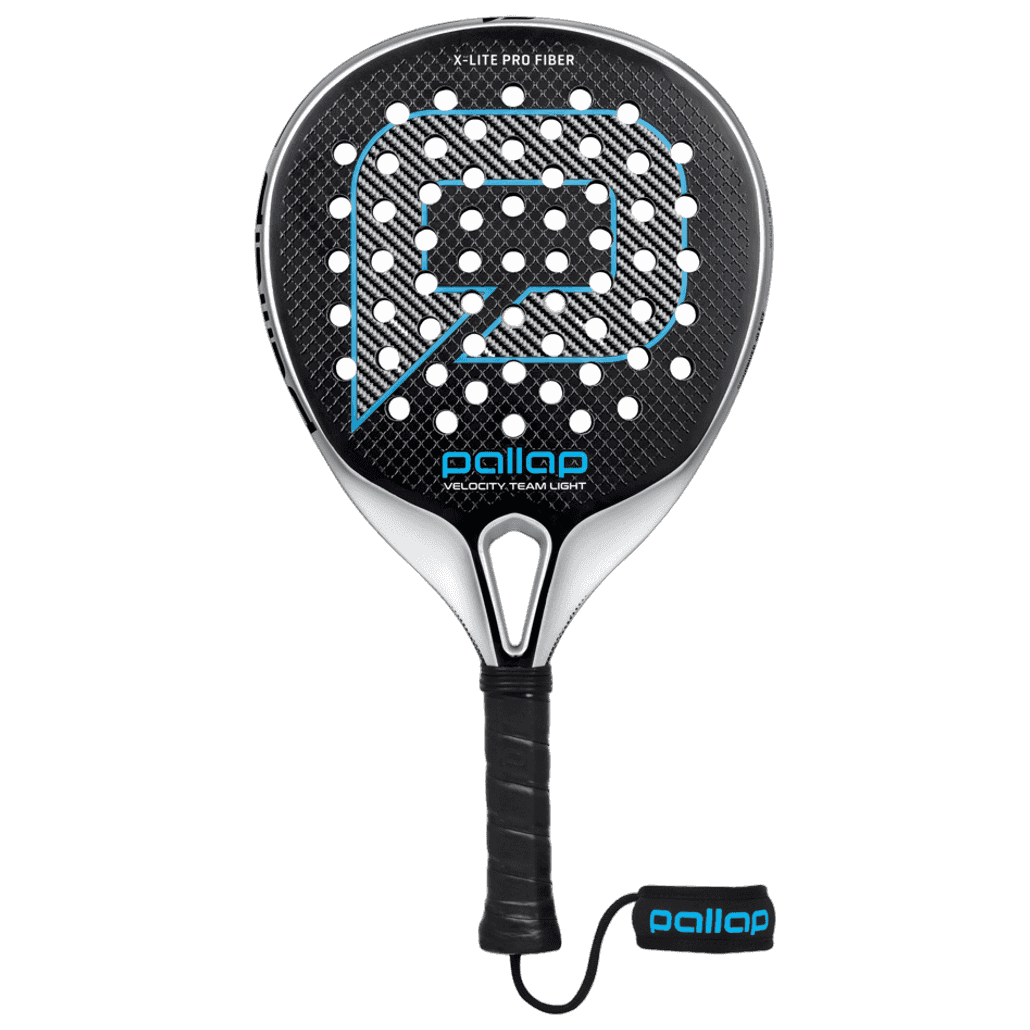
The Pallap Velocity Team Light 2026 is a control-first racket with a very forgiving, easy-moving character. It is built for players who value clean placement, quick reactions, and a racket that does not punish the occasional off-center contact.
I see it fitting regular club players who spend plenty of time defending, building points, and looking for better margin in their volleys and lobs rather than free power.
Its ceiling in attack is clear, though. This is not the racket I would pick to finish points through brute-force smash power.
Technical analysis
Shape & balance
The tear shape gives the Velocity Team Light a more neutral profile than a full round control racket, but its low balance keeps the handling very easy. The head comes through quickly in compact swings, which matters on fast exchanges at the net and late defensive blocks.
That light, low-balanced setup also explains why the racket is so manageable. I would expect it to feel quick when changing from backhand to forehand, or when reacting to a body volley. The trade-off is less mass behind the ball. Players who generate their attack with a long, forceful swing may find it lacks punch at the top end.
Materials & construction
Pallap uses a Dual Carbon frame, Fibre Glass faces, and a PURETOUCH 28 core. The result is a clearly soft response: the ball stays on the face a fraction longer, and the racket helps produce depth without needing a hard strike.
Fiberglass is a sensible choice for this character. It should offer comfortable ball exit and a more forgiving response than a stiff carbon face, particularly on defensive contacts that are not perfectly centered. The large, usable sweet spot reported in the external assessment fits that construction. Still, the soft face and light setup will not give a crisp, explosive hit on overheads.
On-court feel
Baseline play
From the baseline, this is where I expect the Velocity Team Light to make the most sense. Its forgiving response should help keep defensive lobs playable, even when contact is slightly low or toward the edge of the face. On off-the-wall play, the easy acceleration can be useful when there is little time to prepare.
The ball exit is high, so I would not overwork the stroke. A compact movement should be enough to send the ball deep. That can be a real advantage for players who sometimes leave defensive balls short, but it also means touch shots need a relaxed hand. If I push too much on a drop shot or chiquita, the soft response may send it longer than intended.
At the net
Quick hands are the main attraction here. The low balance should make blocks, punch volleys, and fast direction changes feel uncomplicated. I would use it to move the ball around rather than trying to hit through opponents.
It should also be friendly on awkward volleys, since the sweet spot is reported to remain effective well beyond the center. What it will not do is make a passive volley heavy. To put real pressure on the opponent, I would need to create pace myself.
Bandeja and víbora
The racket’s maneuverability should help keep the face stable through a controlled bandeja. Direction and height look like its stronger assets, especially when the goal is to maintain the net rather than force a winner.
A more aggressive víbora is possible, but this is not a weapon built around a biting, penetrating overhead. Players who rely on heavy slice and explosive acceleration may want a firmer face and more head weight.
Conclusion
I would look at the Velocity Team Light if control, comfort, and quick handling matter more than outright attack. It suits players who want help in defense, clean blocks at the net, and a forgiving response across the face.
The compromise is straightforward: limited raw power. Its soft feel and low balance make padel easier in reactive situations, but they do not provide the authority needed for consistently damaging smashes or heavy attacking overheads.
What other reviewers say
- La Gana Racket Finderen
The editorial assessment puts it firmly on the control side: it favours placement and keeps off-centre contacts playable. The trade-off is limited raw power, while its light weight and low balance should make it quick to manoeuvre.
Switch Intelligence
Be the first to share where you switched from.
Community reviews
Real feedback from players who used this racket.
Add your review
To submit your review, log in first. You can still read all approved community reviews below.
Add review


