

Vibora King Cobra Technic 2026
A high-balance diamond built to finish points with authority, asking for early preparation and clean contact when defense gets tight.
Our Take
Shape
Diamond
Weight
360 - 375 gr
Touch
Medium-Soft
Core
Sandwich-type EVA
Faces
Jacquard Carbon
Frame
Carbon
What we like
- Explosive flat smash finishes
- Heavy, low attacking volleys
- Rough face grips *víboras*
What we don't
- High balance slows reaction volleys
- Compact sweet spot punishes mishits
- Defensive lobs need clean timing
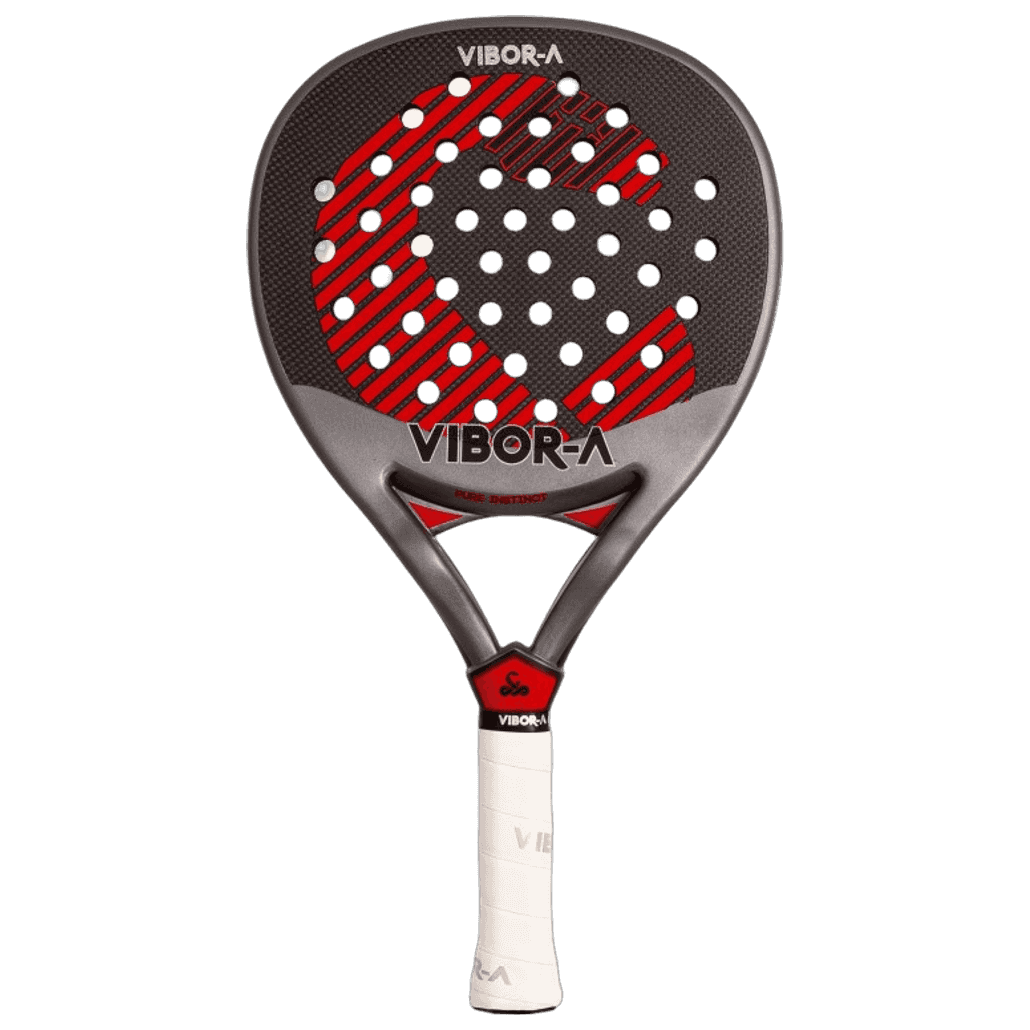
The Vibora King Cobra Technic 2026 is an unapologetically attacking racket. It wants the point moving forward, the ball struck early, and the finish taken with conviction.
I see it in the hands of an advanced player who already creates their own pace and does not need a forgiving racket to tidy up late contact. This is not a relaxed all-court option. It is built to make the net and overhead game feel dangerous.
Technical analysis
Shape & balance
Its Diamond shape and clearly high balance define nearly everything it does. The sweet spot sits high, which gives me more leverage on overheads and attacking volleys, but it also means I have to prepare early. Miss the center or arrive late, and the racket is much less cooperative.
That setup rewards a committed swing. On flat attacks, it transfers energy very directly, while the compact sweet spot asks for clean mechanics. Quick reaction volleys are not its favorite situation; the head takes time to get moving, especially during fast exchanges close to the net.
Materials & construction
The carbon frame, Carbon Jacquard faces, and sandwich-type EVA core produce a response that feels more direct than the listed Medium-Soft feel might suggest. There is some ball exit, but this is not a soft, trampoline-like racket that sends defensive balls deep for free.
I found the face texture especially relevant on cut shots. It gives the ball enough bite to work angles on a bandeja or put extra side spin into a víbora. The construction feels geared toward firm contact: rewarding when I accelerate through the ball, less generous when I simply place the racket behind it.
On-court feel
Baseline play
From the baseline, I need to do more of the work. Defensive lobs require a clean upward action and good timing because the racket does not offer much easy lift or free depth. Off-the-wall play is similarly demanding: centered contact feels crisp, while contact toward the edge loses precision quickly.
Blocks against pace can be solid if I get the face set early, and the racket has enough stability to send a firm block low. Still, I would not choose it for long defensive phases or for players who rely on a large sweet spot to recover difficult balls.
At the net
At the net, its character makes immediate sense. Punch volleys come off heavy, and I can drive the ball through the middle without needing a huge swing. The response is firm enough to keep aggressive volleys low, though the high balance makes fast hand battles less comfortable than with a more maneuverable racket.
The rough face also helps on controlled attacking shots. A short chiquita or cut volley can carry useful grip, but this is not the racket I would reach for when touch and effortless placement are my main priorities.
Smash
The smash is the King Cobra Technic’s natural territory. Flat finishes feel explosive, and there is clear help when I go after an x3-style smash with proper technique. It also handles aggressive víboras well: the face grips the ball, while the high balance lets me drive it deep and heavy.
That power comes with a cost. Players with incomplete overhead mechanics may feel the racket pulling them into rushed contact, and repeated hard swings can be demanding on the arm.
Conclusion
I would put the King Cobra Technic 2026 in the hands of an advanced, attack-minded player who wins points through volleys, overhead pressure, and decisive finishes. It rewards early preparation, clean contact, and a willingness to swing through the ball.
The trade-off is obvious: less maneuverability, a smaller usable sweet spot, and limited defensive assistance. Beginners and players who want easy ball exit from the back of the court should look elsewhere.
What other reviewers say
- TuMejorPalaes
This test highlights lively ball output and substantial punch on volleys and smashes, with a rough face that helps generate spin. In return, directional control and agility in quick exchanges require more precise technique.
- AvisPadelfr
AvisPadel rates it as a strongly power-led racket for advanced players, particularly effective for smashes, viboras, and aggressive net play. Its firm response, relatively compact sweet spot, and limited maneuverability punish late preparation and less refined technique.
- PadelTestLabes
The analysis describes it as explosive on x3 smashes and flat attacking shots, with good bite for sliced bandejas and viboras. From the back of the court it offers little free help, while the high balance and elevated sweet spot reduce reaction speed and off-centre forgiveness.
Switch Intelligence
Be the first to share where you switched from.
Community reviews
Real feedback from players who used this racket.
Add your review
To submit your review, log in first. You can still read all approved community reviews below.
Add review


