

Vibora Yarara Atrox 2027
A hard-hitting diamond with a medium-hard feel and a demanding sweet spot, for players who attack at the net without hesitation.
Our Take
Shape
Diamond
Weight
360 - 375 gr
Touch
Medium-Hard
Core
EVA Pro Hard
Faces
Aluminized 12K Carbon
Frame
Carbon
What we like
- Smashes with serious hitting power
- Decisive punch volleys at net
- Very composed and penetrating *bandejas*
What we don't
- Small upper-face sweet spot
- Defense demands arm and legs
- Medium-high balance slows reactions
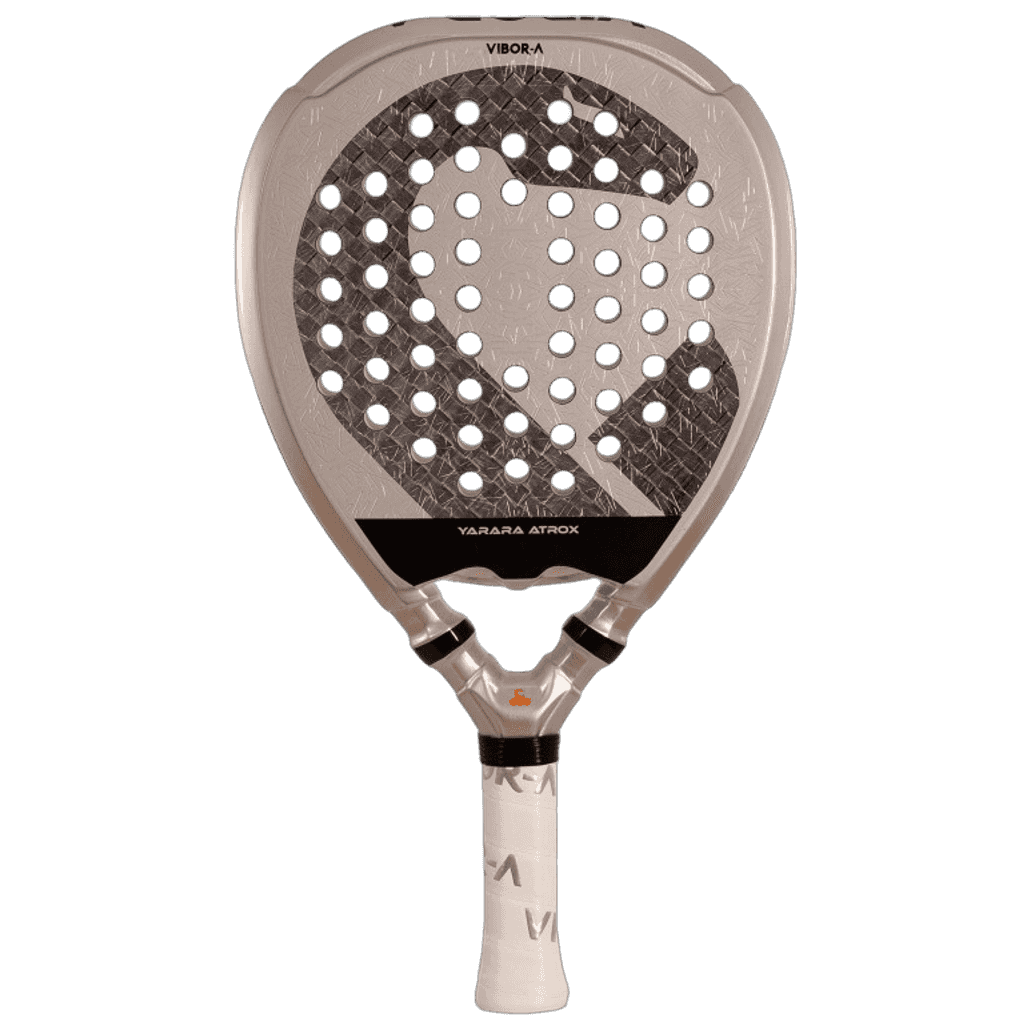
Vibora Yarara Atrox 2027 is an attacking racket with very little interest in disguising its priorities. The diamond shape and medium-hard feel put it firmly in the hands of players who want to finish points, drive volleys through the court, and hit overheads with intent.
I see it as a racket for an experienced player who already creates their own timing. It will reward a committed swing. It will not rescue late preparation or passive defense.
There is control here, but it is the control of a firm, demanding racket—not the easy, cushioned control of a softer round model.
Technical analysis
Shape & balance
The diamond shape and medium-high balance are central to how the Yarara Atrox 2027 behaves. Its sweet spot sits toward the upper part of the face, which gives the racket real leverage on aggressive volleys, víboras, and smashes. Catch the ball cleanly and it should feel very direct.
That same layout makes it less forgiving than a teardrop or round racket. Off-center contact, especially when defending low balls near the glass, is likely to feel harsher and less productive. I would not choose this racket for a player whose game depends on easy defensive recovery and large margins for error.
Materials & construction
A carbon frame, aluminized 12K carbon faces, and EVA Pro Hard core point toward a compact, firm response. The faces should give the ball a crisp exit when I accelerate through contact, rather than adding much trampoline effect on their own.
That construction also suggests good stability through the ball. On fast exchanges, I expect the frame to hold its line well instead of twisting on firm volleys. The trade-off is clear: touch shots require more care. A soft-handed drop shot or chiquita will need cleaner feel from the player because the hard core is not likely to absorb much pace for you.
On-court feel
Baseline play
From the baseline, I would use the Yarara Atrox to play with purpose rather than simply keep the ball in play. It should suit low-driven lobs and firm blocks when I can get the racket behind the ball early. The face should reward a positive stroke with depth.
Defensive lobs are where the demand shows up. The lower ball exit means I need to generate more of the lift and pace myself, particularly when stretched wide or playing late off the wall. Players who rely on a racket to provide easy rebound may find it tiring over a long match.
At the net
At the net, this is much more at home. The firm face should make punch volleys feel decisive, while the head-biased balance helps send the ball deep with a short, compact movement. I would expect it to work especially well for attacking the opponent’s feet or pressing the middle after a weak return.
Quick reaction blocks are less automatic. The racket should be stable, but not especially maneuverable compared with a lower-balance option. In frantic exchanges, I would need active wrist and good preparation rather than relying on the racket to move effortlessly.
Bandeja and víbora
The overhead game is its natural territory. The firm response and upper sweet spot should let me hit a penetrating bandeja without overhitting, then accelerate the víbora when I want more bite and speed off the side wall.
A full smash is where the racket’s power-oriented character should be most obvious. Still, this is not free power: the hard core wants acceleration and clean contact. Players without a repeatable overhead technique may get more work than reward.
Conclusion
I would put the Yarara Atrox 2027 in the hands of an advanced or confident intermediate player who wants a firm attacking racket for net pressure and overheads.
The trade-off is forgiveness. Its smaller effective sweet spot, firmer rebound, and more demanding balance make defense and touch play less comfortable than with a softer, lower-balance racket.
Switch Intelligence
Be the first to share where you switched from.
Community reviews
Real feedback from players who used this racket.
Add your review
To submit your review, log in first. You can still read all approved community reviews below.
Add review


