

Dunlop Titan Killer 2.0 2024
A lively tear-shape built to finish points, with effortless depth from the baseline and enough forgiveness to keep the attack flowing.
Our Take
Shape
Tear
Weight
360 - 375 gr
Touch
Medium
Core
Mega Flex Core
Faces
Fiberglass
What we like
- Easy baseline depth
- Lively defensive lob exit
- Penetrating smash and víbora pace
What we don't
- Slower in rapid volley exchanges
- Smooth face limits slice bite
- Touch shots need quieter hands
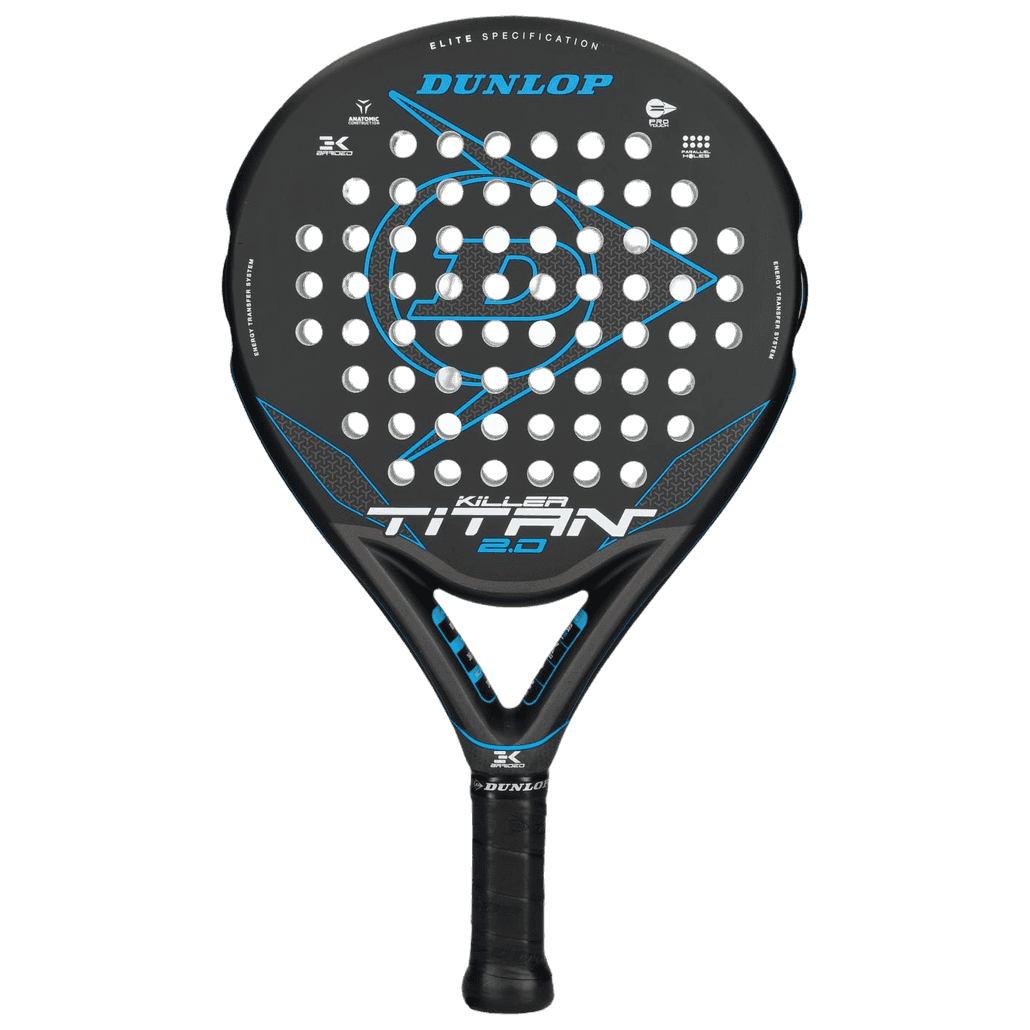
Dunlop Titan Killer 2.0 2024 is a lively, attack-minded racket that wants the ball moving forward. Its tear shape gives it more reach and finishing intent than a round control racket, while still leaving enough margin to build points from the baseline.
I found its main appeal in the easy depth it produces. You do not need to overhit every ball to push opponents back, and that helps when the pace rises.
This is not a delicate, spin-heavy racket. It plays more directly: lively off the face, comfortable for aggressive overheads, and less convincing when touch and quick hand changes are the priority.
Technical analysis
Shape & balance
The tear format puts the sweet spot higher than a control-focused racket, though it is not as demanding as an extreme diamond. The reported generous sweet spot is noticeable in the way it keeps producing a useful ball even when contact is slightly outside center.
Its balance feels geared toward offense. I would not call it unmanageable, but it asks more from the wrist and forearm in fast exchanges than a head-light racket would. That extra presence in the head helps the racket carry through on attacking shots; the trade-off appears when you have to react repeatedly at the net.
Materials & construction
The fiberglass faces and Mega Flex Core give the racket its springy character. Ball exit is one of its stronger traits: compact swings from the back can still generate depth, and defensive shots do not feel dead when you are under pressure.
Despite that active response, the stated medium feel fits. It is not a soft, cushioned racket that absorbs everything, nor does it feel harsh on clean contact. The smooth face matters, though. It does not create much natural bite, so players who rely heavily on loaded slice and aggressive cut shots will need to provide that action themselves.
On-court feel
Baseline play
From the baseline, this racket is forgiving in the useful sense: it helps the ball travel. On defensive lobs, especially when there is little time to prepare, the core gives enough rebound to clear the net without forcing a huge swing. Off-the-wall play also benefits from that easy exit.
Control is adequate rather than surgical. I could place a low-driven lob and play a firm block with confidence, but touch shots require a quieter hand. A chiquita can sit up if I let the racket’s rebound do too much work.
At the net
The Titan Killer 2.0 hits a penetrating volley when I get my preparation done early. There is enough stability to punch through the middle or accelerate a ball toward the feet, and the larger sweet spot reduces the punishment for slightly rushed contact.
Quick volley exchanges are less natural. The head does not move as freely as a more maneuverable racket, so repeated changes from forehand to backhand can feel slow. Players who win points through rapid blocks, drop volleys, and constant hand speed may find it cumbersome.
Bandeja and víbora
This is a more natural environment for it. The racket carries well through a bandeja and gives the víbora enough pace to keep opponents pinned after the glass. It favors a flatter, driving overhead rather than one built around heavy side spin.
Smash
The smash is where its offensive profile makes most sense. The racket responds eagerly when I accelerate through the ball, with easy power and a lively release that can turn a good setup into a finishing chance. It rewards clean technique, but it does not demand a huge swing to feel effective.
Conclusion
I would point intermediate and advanced attacking players toward this racket, particularly those who want easier depth and a more assertive smash without moving all the way to an unforgiving diamond shape.
The trade-off is clear: it is not the quickest option at the net, and its smooth fiberglass face offers limited help for heavily sliced shots. For a player who values direct ball exit, strong overheads, and a racket that can push the point forward from the baseline, those compromises are reasonable.
What other reviewers say
- PadelTestLabes
The review portrays it as a lively, power-oriented racket for smashes and víboras, with easy depth from the back of the court. The trade-off is slower handling in repeated net volleys, while the smooth face provides limited bite for heavily sliced shots.
Switch Intelligence
Be the first to share where you switched from.
Community reviews
Real feedback from players who used this racket.
Add your review
To submit your review, log in first. You can still read all approved community reviews below.
Add review


