

Padelsmith #1 2026
A high-balance diamond with real punch, yet enough softness and forgiveness to stay composed in fast exchanges.
Our Take
Shape
Diamond
Weight
350 gr
Touch
Medium-Soft
Core
EVA Soft Black 28
Faces
Italian 12K carbon
Frame
Hand-layered 12K carbon
What we like
- Forgiving off-center defensive blocks
- Precise, firm net volleys
- Bite on bandejas and víboras
What we don't
- High balance slows wrist reactions
- Below-maximum smash finishing ceiling
- Long-term durability remains unproven
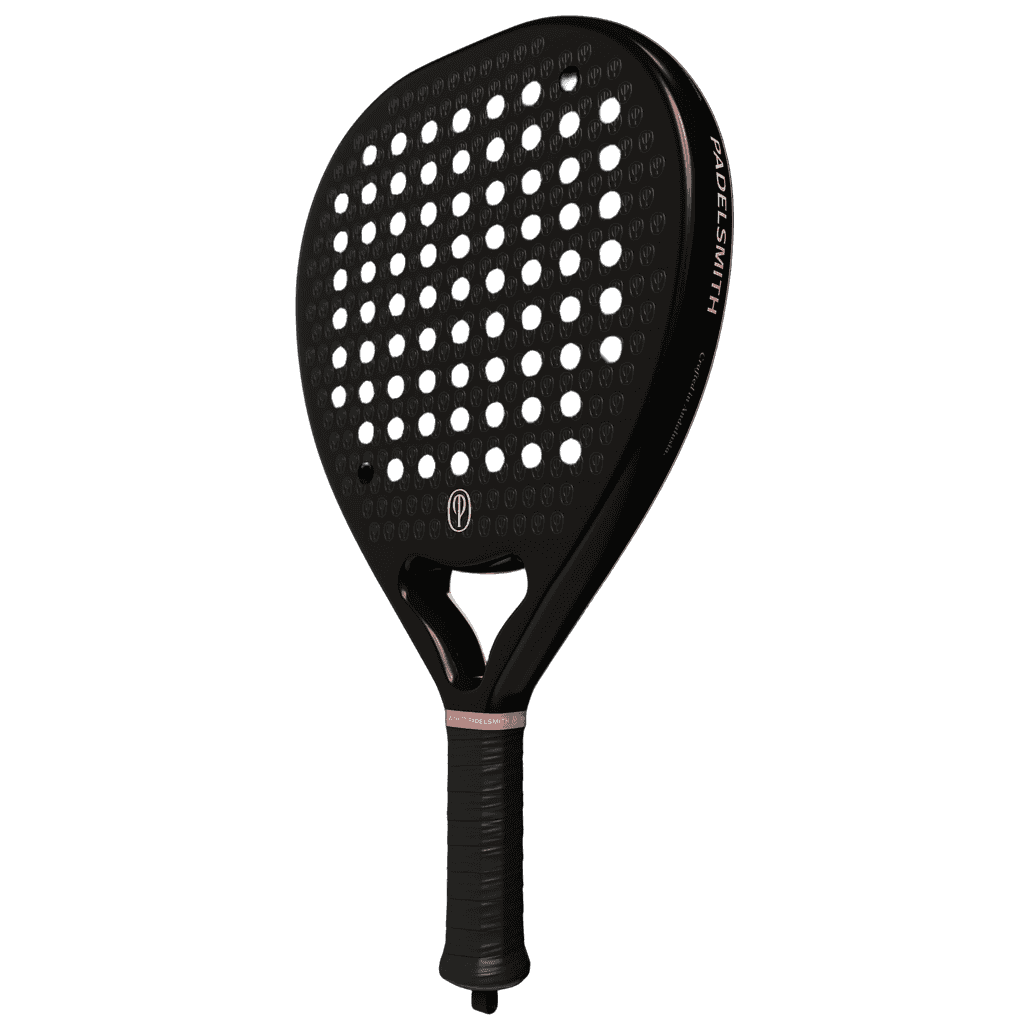
Padelsmith #1 2026 is an attacking racket with more restraint than its diamond shape suggests. It wants to finish points, especially from the net, but it does not punish you every time contact drifts away from the center.
I found it aimed at intermediate and advanced players who like a firm response and play proactively, without wanting the demanding, overly head-heavy feel of some power diamonds.
The medium-soft feel is a big part of that character. There is enough firmness to hit through the ball, but the response is not dry or excessively abrupt.
Technical analysis
Shape & balance
The diamond mold and high balance put the sweet spot slightly higher than on a round or teardrop racket. That gives the #1 a clear attacking bias: volleys carry weight, overheads come off with purpose, and it rewards a full swing.
Still, this is not one of those diamonds that becomes awkward at the baseline. Reviews consistently point to a surprisingly manageable defensive side, and that matches the concept here: the racket keeps enough forgiveness on off-center contact to make blocks and defensive lobs less stressful than I would expect from this shape.
That said, it is not head-light. Players who rely on quick wrist adjustments or very compact defensive reactions may find it slower than a control-oriented racket.
Materials & construction
The frame uses hand-layered 12K carbon, while the faces are built with Italian 12K carbon. That combination gives the #1 a crisp, responsive contact point. I would expect clear feedback on flat volleys and a direct response when accelerating through the ball.
Underneath, the EVA Soft Black 28 core takes some edge off the carbon face. Ball exit is lively rather than explosive, and the softer core should help on slower defensive contacts where a firm diamond can otherwise feel dead.
The surface also appears to provide useful bite. It is not just cosmetic texture: the reported response on cut overheads suggests it helps the ball grip briefly before release. One point remains open, though. Padelsmith is still a young brand, so long-term frame and face durability have not yet built the same evidence base as established names.
On-court feel
Baseline play
From the baseline, I would use this racket with an active, forward-minded game. The response is forgiving enough for off-the-wall play and blocks, with enough rebound to send the ball back deep without forcing every shot.
A low-driven lob comes off cleanly when I commit to the stroke, and the racket does not feel cumbersome during transitions. But it will not mask poor timing in the way a softer, rounder racket can. If you arrive late and try to flick the ball from behind your body, the high balance is still there.
At the net
This is where the #1 makes most sense. Firm faces give volleys a precise, compact response, so I can press the ball through the middle or play a controlled drop shot without feeling the racket trampoline the contact.
The sweet spot is reasonably generous for a diamond, which helps when exchanges speed up. It is not a specialist touch racket, though. Players who build their net game around very soft hands and constant chiquitas may prefer a lower-balance option.
Bandeja and víbora
The textured carbon face and firm response suit the bandeja and víbora well. I would expect reliable direction and enough bite to keep the ball low after the glass. It encourages an aggressive overhead without demanding that every ball be hit at full pace.
Smash
There is serious power available, particularly given its manageable handling. But this is not the racket for players chasing the absolute highest smash ceiling. Heavier, more aggressively head-loaded diamonds will produce more raw finish on a clean overhead. The #1 trades some of that peak violence for better usability across the rest of the point.
Conclusion
I would put the Padelsmith #1 2026 in the hands of an intermediate or advanced attacker who wants a diamond racket that remains usable in defense and composed at the net.
It offers a firm carbon response, strong ball exit, and convincing overhead control without becoming excessively harsh. The trade-off is clear: it does not have the easiest handling for reactive defenders, nor the maximum smash output of the most demanding power rackets.
Its biggest unanswered question is durability over time. On court, though, the #1 looks like a sensible attacking racket for players who want power with some forgiveness still built in.
What other reviewers say
- PadelCriticen
The reviewer found this high-balance diamond unusually easy to use in defence and at the net, with a forgiving response on off-centre contact. Its firm, responsive face helped with precise volleys and gave the textured surface useful bite on bandejas and víboras, although it does not deliver the outright smash ceiling of heavier, more head-loaded diamonds.
- PadelRacketReviews.comen
This review rates the #1 as a power-focused diamond with strong attack for its weight, while the Soft Black EVA core softens the otherwise firm full-carbon response. It sees the racket as a manageable option for intermediate attackers rather than an excessively harsh power frame.
Switch Intelligence
Be the first to share where you switched from.
Community reviews
Real feedback from players who used this racket.
Add your review
To submit your review, log in first. You can still read all approved community reviews below.
Add review


