

Pallap Power Star 2026
A diamond-shaped attacker with crisp intent: explosive overheads, precise direction, and just enough softness to stay connected.
Our Take
Shape
Diamond
Weight
355 - 360 gr
Touch
Medium-Soft
Core
Puretouch 28
Faces
15K Alumatrix Carbon
Frame
Dual Carbon
What we like
- Direct, penetrating volley response
- Controlled attacking overhead direction
- Strong slice bite on víboras
What we don't
- Compact sweet spot punishes mishits
- Passive defense lacks free rebound
- Only moderate contact comfort
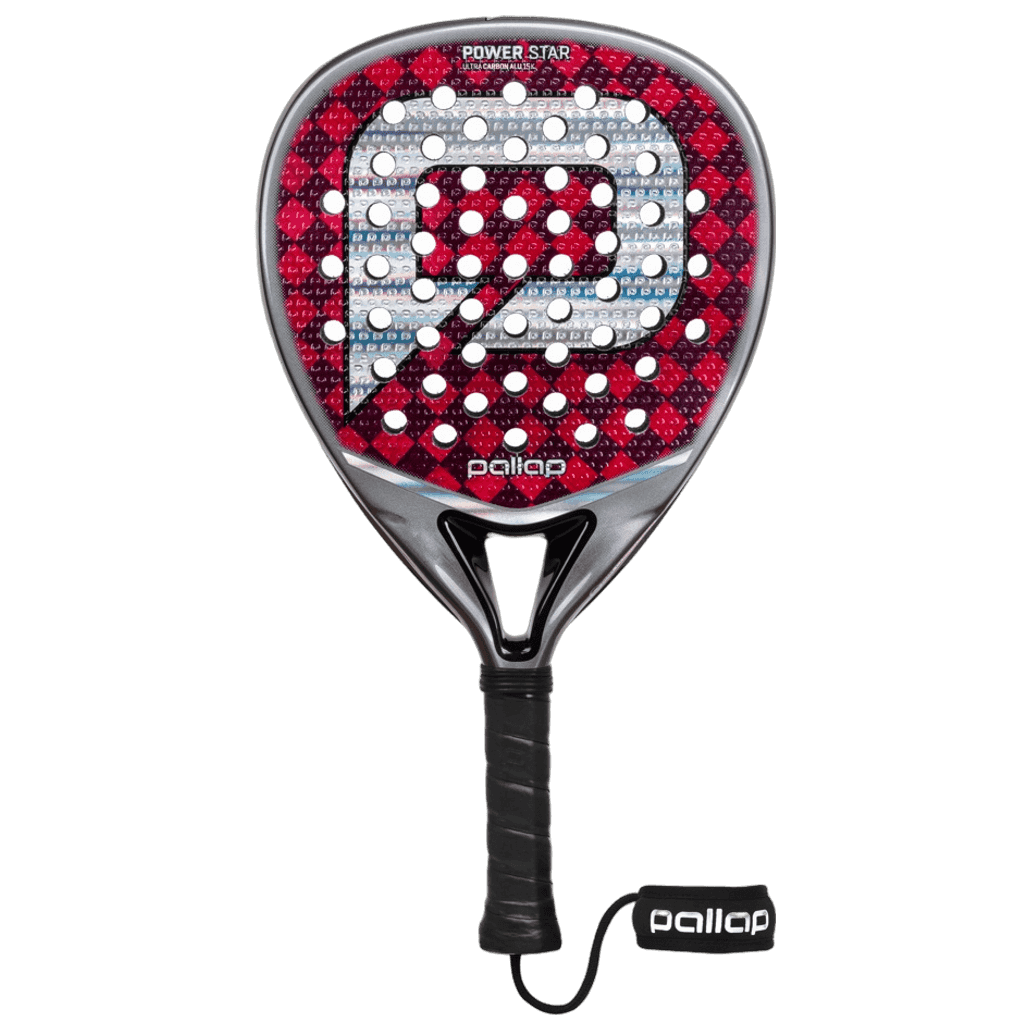
The Pallap Power Star 2026 is an attacking racket with a direct response and a clear preference for players who create pace themselves. It wants to be moved through the ball with conviction, especially above the shoulder line.
Its Diamond shape and Medium-Soft feel give it more usable control than many power-focused rackets, but this is not a forgiving defensive tool. Clean contact matters.
I see it fitting an intermediate-advanced player who spends plenty of time pressing at the net and has the technique to prepare early from the baseline.
Technical analysis
Shape & balance
The diamond profile puts the sweet spot higher in the face, and the racket feels built to reward an aggressive contact point. The swing weight stays manageable, so I could accelerate it through a volley or víbora without feeling like the racket was dragging behind my hand.
That said, the sweet spot is not especially generous. Contact outside the center loses some stability and precision, particularly on rushed blocks or defensive lobs. Players who rely on late, compact reactions will notice that quickly.
Materials & construction
The Dual Carbon frame gives the structure a firm, stable base, while the 15K Alumatrix Carbon faces produce a crisp, fairly direct hit. There is enough flex in the face to help shape the ball, but it does not have the long dwell time of a fiberglass racket.
Pallap pairs that layup with a Puretouch 28 core. The result is a medium-soft response rather than a hard, dry impact. Ball exit is controlled at slower speeds, then becomes much more assertive once I accelerate. Comfort is adequate, not exceptional: the racket communicates contact clearly, including the less pleasant ones.
On-court feel
Baseline play
From the baseline, the Power Star asks for preparation. When I set my feet and meet the ball in front, it gives me reliable direction on low-driven lobs and enough bite to play a controlled chiquita toward the feet. Off-the-wall play is also accurate when I swing through the ball rather than simply presenting the face.
Easy depth is not its strongest point. On passive defense, there is less free rebound than I would want from a more forgiving medium-soft racket. A late block can sit short, and mishits do not get much help from the frame. This is a racket for an active defender, not someone looking to absorb pace and let the racket do the work.
At the net
The direct face response works well in fast exchanges. Volleys come off with a firm, penetrating trajectory, and I found it easy to hold direction on punch volleys rather than spraying the ball long. The maneuverability is good for a diamond racket, though the compact sweet spot still punishes lazy hands.
Its strongest net shot is the aggressive volley played through the middle or into the fence-side gap. There is enough control to take pace off for a drop shot, but touch shots require clean feel; this is not a naturally plush racket.
Bandeja and víbora
This is where the Power Star starts to make sense. A committed bandeja comes through with good depth and directional control, while the face gives enough grip to work slice into a víbora. Reviews of the racket consistently point to its ceiling on these attacking overheads, and that matches its direct, acceleration-dependent character.
Conclusion
I would choose the Power Star 2026 for an attacking player who already has dependable timing and wants a racket that rewards fast, clean swings. It is particularly convincing for volleys, bandejas, víboras, and a full smash.
The trade-off is forgiveness. Its sweet spot is not broad, comfort is only moderate, and passive defense can feel demanding. Players wanting easier rebound, a softer touch, or more help on rushed contacts should look toward a rounder, lower-balance racket.
What other reviewers say
- padel.howen
This review characterizes it as a direct-feeling attacking racket that rewards clean acceleration, with a high ceiling for smashes, víboras and hard bandejas alongside strong directional control and spin. The trade-off is only moderate comfort and mishit forgiveness, so it needs preparation in defense and rapid net exchanges.
Switch Intelligence
Be the first to share where you switched from.
Community reviews
Real feedback from players who used this racket.
Add your review
To submit your review, log in first. You can still read all approved community reviews below.
Add review


