

Royal Padel R Ace 2026
A serious power diamond with enough composure for the net, provided you arrive early and can manage its high balance.
Shape
Diamond
Weight
365 - 380 gr
Core
EVA MID HARD
Faces
3K Carbon
Frame
3K Carbon
What we like
- Penetrating volleys with stable contact
- Deep, heavy *bandejas*
- Controlled power on prepared smashes
What we don't
- High balance slows defensive reactions
- Late blocks need firm preparation
- Passive shots lack easy ball exit
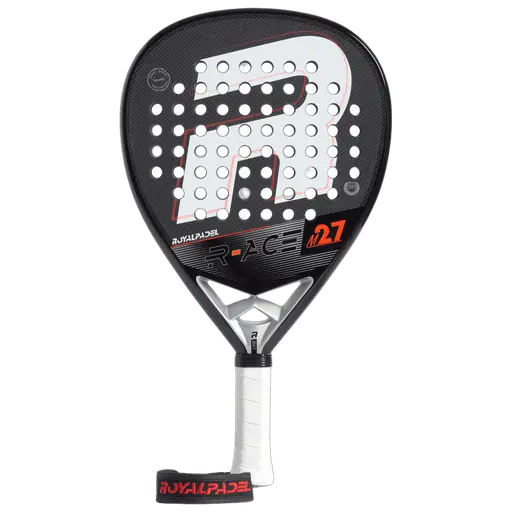
Royal Padel R Ace 2026 is a power-oriented racket that still leaves room for placement. It has a diamond shape and a clearly offensive setup, but it is not one of those uncontrollable diamonds that only makes sense when you are trying to finish every ball.
I see it as a racket for players who want to own the net and hit overheads with purpose, while keeping enough touch for a measured bandeja or a deep volley. The trade-off is obvious: it asks for early preparation and does not forgive lazy defensive reactions.
Technical analysis
Shape & balance
The diamond mold puts the sweet spot slightly higher than I would want for a defense-first racket. Its high balance gives the R Ace useful momentum through the ball, especially once the racket is already moving forward. On volleys and overheads, that helps produce a heavier, more penetrating ball without having to overhit.
That same balance is less friendly when the point gets frantic. Late blocks, quick body shots at the net, and rushed off-the-wall pickups require a firm hand and good anticipation. I would not call it cumbersome, but it is not a quick, head-light racket that disappears in your hand either.
Materials & construction
Royal Padel uses 3K carbon in both the frame and faces, paired with an EVA MID HARD core. The result should suit players who prefer a firmer, more direct contact rather than a soft, springy response. The ball exit is controlled; the racket does not launch the ball for you when your stroke is passive.
That firmer construction also explains why it feels more reliable when you accelerate through the shot. There is enough structure to hit through volleys, víboras, and prepared smashes with confidence. On slower defensive contacts, though, it asks you to supply the lift and depth yourself.
On-court feel
Baseline play
From the baseline, the power does not come for free: it needs a full, prepared swing. A well-timed defensive lob can travel with good depth, and low-driven lobs come off cleanly when I strike out in front. The response is predictable rather than explosive.
The limitation is reaction speed. If I am late after the glass or defending a fast counterattack, the high balance makes it harder to get the racket face into position. Players who rely on quick wrist blocks and easy ball exit may find it demanding over a long match.
At the net
This is where the R Ace makes the most sense. The frame feels stable through firm volleys, and I can direct the ball with enough confidence to play short angles or press deep toward the feet. It rewards an assertive net position without feeling wildly inaccurate.
Fast exchanges are the exception. In hand battles, the racket needs clean preparation; I would not expect it to be as nimble as a round, lower-balanced control racket. Still, once I get it set, the contact has authority.
Bandeja and víbora
The racket’s balance works well on overheads with a full preparation. I can feel the head carrying through the ball on a bandeja, helping me keep it deep and heavy without forcing the shot. The víbora benefits from that same forward momentum, particularly when I am looking to accelerate through the side of the ball.
It is less forgiving if my timing is rushed. These shots need a complete swing and stable technique; flicking at the ball will not bring out its best response.
Conclusion
I would put the R Ace in the hands of an intermediate-to-advanced player who already likes attacking from the net and has dependable overhead mechanics. It delivers controlled power rather than raw, chaotic punch.
Its strongest areas are volleys, prepared bandejas, víboras, and smashes. What you give up is defensive ease: quick reactions, improvised blocks, and late off-the-wall recoveries take more work than they would with a lower-balanced racket.
What other reviewers say
- padel.howen
The reviewer finds it a more controllable, usable power diamond than extreme attacking frames. It excels on volleys, bandejas, viboras and fully prepared overheads, but its high balance and weight punish late reactions and fast defensive work.
Switch Intelligence
Be the first to share where you switched from.
Community reviews
Real feedback from players who used this racket.
Add your review
To submit your review, log in first. You can still read all approved community reviews below.
Add review


