

Royal Padel R Ace Light 2026
A light diamond with a firm, attacking response, built to finish overheads while keeping enough composure from the baseline.
Shape
Diamond
Weight
350 - 365 gr
Touch
Medium-Hard
Core
EVA MID HARD
Faces
3K Carbon
Frame
3K Carbon
What we like
- Penetrating *víbora* and *bandeja*
- Crisp, driving volley response
- Stable blocks against hard balls
What we don't
- Reduced sweet spot off-center
- Limited passive baseline ball exit
- Demanding late defensive blocks
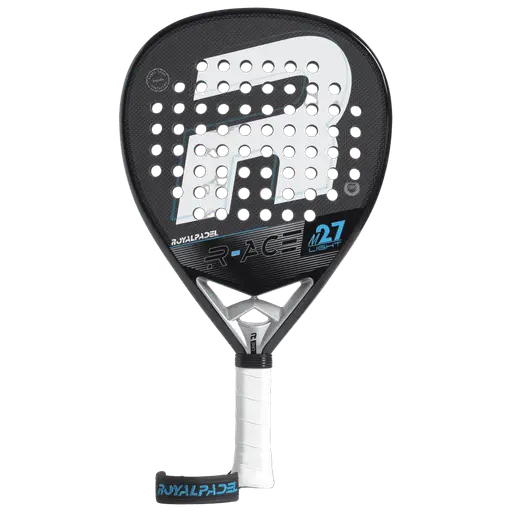
Royal Padel R Ace Light 2026 is an attack-minded racket with a cleaner, more controlled edge than its diamond shape first suggests. I see it as a tool for players who want to press at the net and finish overheads, but who still need enough restraint to keep the point organized.
Its diamond shape and medium-hard feel put it firmly on the firmer, more demanding side of the spectrum. This is not a racket that gives away easy depth from a lazy swing. Put speed through it, though, and it responds with authority.
The “Light” name should not be read as soft or forgiving. It is more about making an offensive mold easier to move than many full-power diamonds, not about turning it into a defensive comfort racket.
Technical analysis
Shape & balance
The diamond profile concentrates the usable hitting area higher in the face, which suits aggressive volleys, bandejas, and smashes. The balance feels geared toward the upper half of the racket rather than truly head-light, so I notice a clear incentive to play forward and accelerate through the ball.
That layout also explains the more limited sweet spot. Off-center contact is not disastrous, but it is less forgiving than on a round control racket. In fast defensive exchanges, especially when the ball arrives low or tight to the body, I would want clean preparation rather than relying on the racket to rescue the shot.
Materials & construction
Royal Padel uses 3K carbon in both the frame and faces, paired with an EVA MID HARD core. On court, that recipe points to a direct response: the ball does not sink deeply into the face, and the racket gives a fairly compact, firm impact.
I like that firmness for driving volleys and putting weight behind a low-driven lob. The frame should also feel stable when blocking hard balls. What it will not provide is the easy trampoline-like ball exit of a softer fiberglass and soft-EVA setup. Players who depend on passive rebound from the baseline may find it a little stingy.
On-court feel
Baseline play
From the baseline, I would describe the R Ace Light as precise rather than generous. A committed swing produces a controlled trajectory and enough punch to turn defense into a more aggressive ball. The medium-hard construction should help keep defensive lobs from floating too much when contact is clean.
The trade-off is comfort. Short blocks and late off-the-wall play require good hands because the racket does not appear built to absorb pace effortlessly. I would not choose it for a player whose game is based on soft touch, easy recovery, and long defensive exchanges.
At the net
This is where the racket makes the most sense. The firmer faces give volleys a crisp release, and the diamond geometry helps me drive the ball through the court rather than merely place it. There should be enough maneuverability for quick exchanges, although it will not feel as quick through the air as a low-balance round racket.
The smaller sweet spot asks for accuracy on reflex volleys. Miss the center and the response loses some of its solidity, particularly on compact backhand blocks.
Bandeja and víbora
The R Ace Light should reward players who hit their overheads with intent. Its firmer response suits a penetrating bandeja and a more aggressive víbora, where I want the ball to travel heavy and stay low after the glass.
A delicate drop shot is not its natural language. It can do it, but the face feedback is more functional than plush.
Conclusion
I would put this racket in the hands of an intermediate-to-advanced player who already creates racket-head speed and wants more authority at the net and on overheads. Its strongest areas are attacking volleys, víboras, and the smash.
In return, you give up some forgiveness. The sweet spot is not broad, passive ball exit is limited, and rushed defense will expose the firmer character. For players who enjoy taking charge of the point rather than waiting for the racket to help them out, that is a fair trade.
Switch Intelligence
Be the first to share where you switched from.
Community reviews
Real feedback from players who used this racket.
Add your review
To submit your review, log in first. You can still read all approved community reviews below.
Add review


